What Is the Parol Evidence Rule?
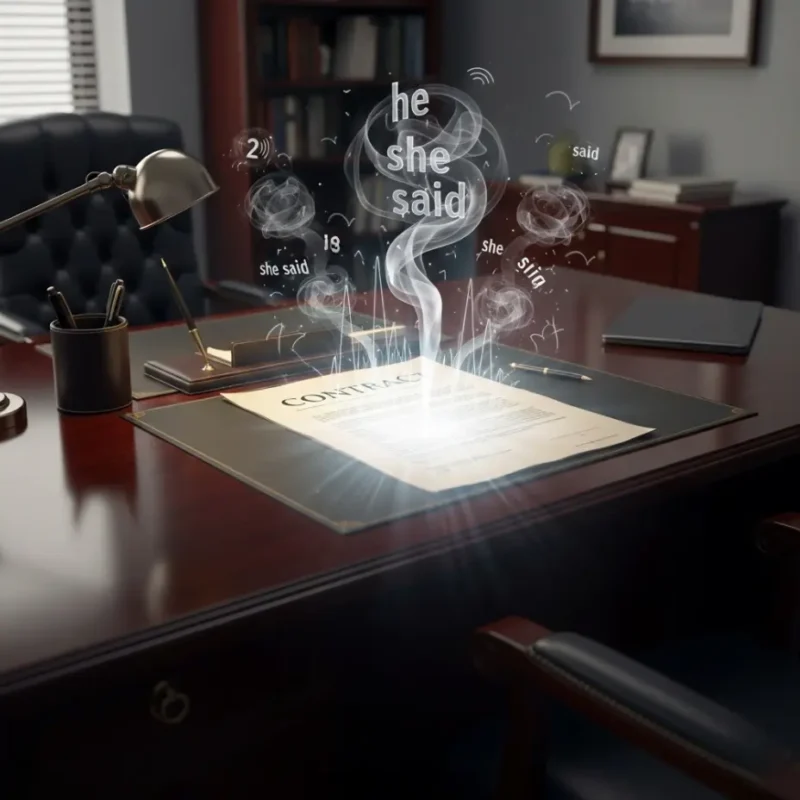
The parol evidence rule is a key principle in contract law that governs how courts interpret written agreements. It limits the use of outside evidence—such as oral statements or earlier drafts—when interpreting or enforcing a final written contract. The rule is designed to uphold the integrity of written agreements and prevent disputes over alleged promises not included in the final document.
Simple Definition
The parol evidence rule prevents parties from using prior or contemporaneous oral or written statements to contradict or alter the terms of a final, fully integrated written contract. In other words, if the contract is complete and clear, outside evidence generally cannot be introduced to change its meaning.
Real-Life Examples
- Real estate sale: A buyer claims the seller promised to include furniture, but the written contract says nothing about it. The court applies the parol evidence rule to exclude the oral statement.
- Employment contract: An employee argues the employer verbally promised lifetime employment, but the contract states it is at-will. The written agreement controls.
- Business agreement: Two companies sign a supply contract. One party later introduces an earlier draft with different pricing, but the parol evidence rule bars its use to contradict the signed contract.
- Loan deal: A borrower insists that the lender said repayment would be flexible, but the contract specifies strict deadlines—only the written terms apply.
Importance of the Term
- Preserves certainty: Ensures that written contracts reflect the final and binding agreement.
- Prevents fraud: Stops false claims about side promises not included in the document.
- Encourages careful drafting: Reminds parties to include all terms they want enforced.
- Supports judicial efficiency: Reduces reliance on conflicting testimony about what was “really” agreed.
Exceptions to the Rule
| Exception | Description |
|---|---|
| Fraud or misrepresentation | Evidence may be allowed if one party lied or concealed terms. |
| Ambiguity | Courts may allow outside evidence to clarify unclear contract language. |
| Incomplete contracts | If a contract is only partially integrated, outside evidence may supplement it. |
| Subsequent agreements | Oral or written modifications made after signing are not barred. |
FAQ
1) Does the parol evidence rule apply to all contracts?
It applies primarily to written contracts that are considered complete and final.
2) Can oral evidence ever be used in court?
Yes, if it falls under an exception like fraud, ambiguity, or subsequent modification.
3) Why is it called “parol” evidence?
“Parol” comes from the French word for “spoken,” referring to oral statements.
4) Does the rule apply internationally?
It is most common in common law countries like the U.S. and U.K., but variations exist elsewhere.
5) How can parties protect themselves under this rule?
By including merger or integration clauses stating that the written contract is the full and final agreement.
Closing
The parol evidence rule is a cornerstone of contract law, ensuring that written agreements remain reliable and enforceable. While exceptions exist, the rule underscores the importance of drafting complete and accurate contracts to avoid disputes.

Hamit Sahin is the founder and editor of LegalTerms.net. He researches U.S. legal terminology and publicly available legal information using statutes, court rules, judicial opinions, government publications, and established legal reference sources.
His work focuses on organizing complex legal concepts into clear, plain-English explanations for general educational purposes.
Hamit is not an attorney and LegalTerms.net does not provide legal advice.