Trademark vs Copyright Confusion Solved with Clear Legal Distinctions
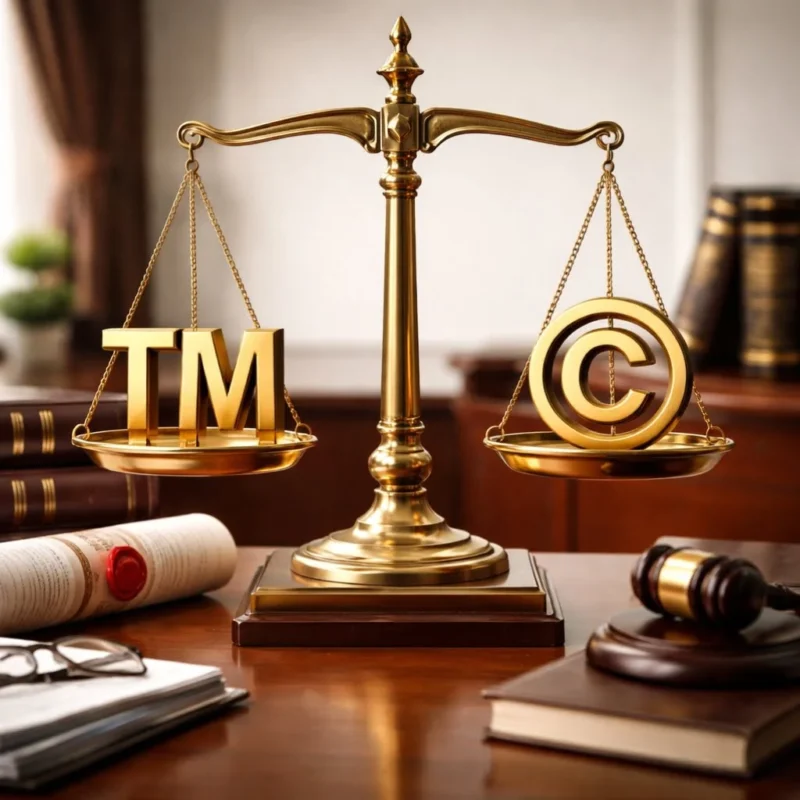
Understanding the distinction between trademark and copyright is one of the most common challenges faced by business owners, creators, and legal professionals alike. Both forms of intellectual property protection serve critical but fundamentally different purposes, and confusing the two can lead to costly legal mistakes, unprotected brand assets, and missed opportunities for commercial security. The debate around Trademark vs Copyright is not merely academic. It has real consequences for startups registering their first logo, authors protecting their published works, and corporations defending decades of brand equity. This article provides clear, authoritative guidance on how these two protections differ, when each applies, and how businesses can strategically use both to secure their intellectual assets in today’s competitive marketplace.
Key Points
- Trademarks protect brand identifiers such as logos, names, and slogans used in commerce.
- Copyright protects original creative works including writing, music, art, and software.
- Copyright arises automatically upon creation, while trademark requires active registration.
- Trademarks can last indefinitely with proper renewal; copyright has fixed term limits.
- Some assets, like logos, may qualify for both trademark and copyright protection simultaneously.
- Businesses that confuse the two often leave their brand identity or creative output legally vulnerable.
- Enforcement mechanisms differ significantly between trademark and copyright law.
- Consulting an intellectual property solicitor before filing either protection is strongly advisable.
What Trademarks Actually Protect and Why Brands Rely on Them
Trademarks exist to protect the commercial identity of a business by securing the exclusive right to use specific signs, symbols, names, or phrases in connection with goods or services. They function as a signal to the marketplace, distinguishing one company’s offerings from another’s. Without trademark protection, competitors could legally use identical or confusingly similar branding to mislead consumers.
The relationship between Trademark vs Copyright becomes clearest when examining what each protection actually covers. Trademarks do not protect creative expression. Instead, they protect source identifiers — the elements that tell a consumer exactly who stands behind a product or service.
Logos, Slogans, and Brand Identifiers That Qualify for Trademark Protection
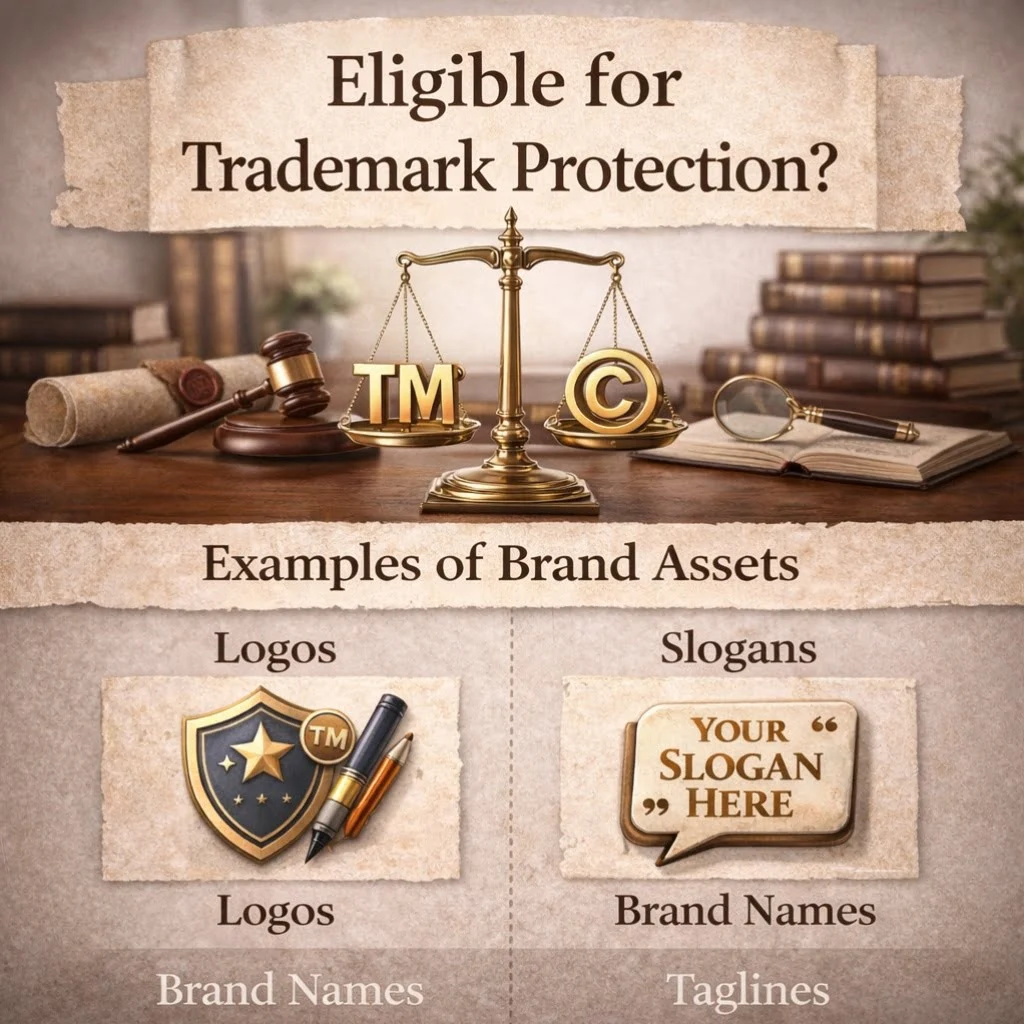
A wide range of identifiers qualify for trademark protection, provided they are distinctive enough to perform the source-identifying function. These include brand names, logos, slogans, product packaging shapes, colours in specific contexts, and even sounds associated with a brand.
For example, a stylised company name used consistently in commerce can be trademarked. A catchy advertising slogan tied to a specific product line also qualifies. However, generic or purely descriptive terms typically fail to meet the distinctiveness threshold required for registration.
How Trademarks Safeguard Consumer Trust and Business Reputation in the Marketplace
Trademarks perform a dual function. They protect the business owner’s commercial investment while simultaneously protecting consumers from deception. When a consumer sees a recognised trademark, they make a purchasing decision based on an expected standard of quality.
This trust mechanism underpins entire industries. A counterfeit product bearing a registered trademark not only damages the brand owner financially but also misleads the consumer. Trademark law addresses both harms, making it a cornerstone of fair commercial competition.
The Core Purpose of Copyright and What Creators Gain From It
Copyright law protects original works of authorship from unauthorised reproduction, distribution, adaptation, and public performance. Unlike trademark, copyright is concerned with creative expression rather than commercial identity. It rewards the creative act itself by granting the creator exclusive rights over how their work is used.
When examining Trademark vs Copyright from a creator’s perspective, copyright is often the more immediately relevant protection. It covers the broadest range of creative output and requires no formal application to take effect.
Original Works of Authorship That Automatically Qualify for Copyright Coverage
Copyright protection extends to literary works, musical compositions, dramatic works, artistic creations, films, sound recordings, software code, and architectural designs, among others. The key requirement is originality, meaning the work must originate from the author and involve a minimal degree of creativity.
Importantly, copyright does not protect ideas, facts, or methods. It protects only the specific expression of those ideas. Two authors can write about the same concept, but neither can copy the other’s particular expression without infringing copyright.
Economic and Moral Rights That Copyright Grants to Creators Upon Creation
Copyright grants two broad categories of rights. Economic rights allow the creator to financially benefit from their work through licensing, selling, or otherwise commercialising it. These rights can be transferred or assigned to third parties, which is why publishing and music contracts often involve copyright assignments.
Moral rights, recognised in many jurisdictions, protect the creator’s personal connection to the work. These include the right to be identified as the author and the right to object to derogatory treatment of the work. Moral rights generally cannot be transferred, even when economic rights are sold.
Key Legal Differences Between Trademark and Copyright Registration
| Feature | Trademark | Copyright |
|---|---|---|
| How It Arises | Requires application and registration | Arises automatically upon creation |
| What It Protects | Brand identifiers used in commerce | Original creative expression |
| Duration | Indefinite with renewal | Life of creator plus 70 years |
| Registration Body | National IP Office (e.g., USPTO, UKIPO) | Copyright Office or automatic |
Why Copyright Arises Automatically While Trademark Requires Active Application
Copyright protection attaches to a qualifying work at the moment of creation and fixation in a tangible medium. No registration is required in most countries, meaning a novelist who writes a manuscript owns the copyright from the first word typed. This automatic protection reflects the policy goal of encouraging creative output without bureaucratic barriers.
Trademark protection, by contrast, requires active steps. A business must apply to a national or regional intellectual property office, demonstrate distinctiveness, specify the relevant classes of goods or services, and survive examination and opposition processes before registration is granted.
The Registration Bodies, Processes, and Documentation Required for Each Protection
In the United States, trademarks are registered through the United States Patent and Trademark Office (USPTO Official Website), while copyright registrations are handled by the U.S. Copyright Office. In the United Kingdom, the Intellectual Property Office (UKIPO) manages both, though through separate processes.
Trademark applications require a clear representation of the mark, identification of relevant goods and services classes, evidence of use or intent to use, and payment of filing fees. Copyright registration, where pursued voluntarily, typically involves submitting a copy of the work and a completed application form.
How Duration and Expiry Rules Differ Between the Two Protections
Duration is one of the most practically significant differences in the Trademark vs Copyright comparison. The two protections operate on entirely different time horizons, which affects how businesses and creators plan their intellectual property strategies over the long term.
Copyright Term Limits Based on the Creator’s Lifetime and Post-Death Extensions
In most jurisdictions, copyright lasts for the lifetime of the creator plus an additional 70 years. This extended post-death term allows the creator’s heirs and estate to benefit commercially from the work. After this period expires, the work enters the public domain and can be freely used by anyone.
For works created by corporations or anonymous authors, different rules apply. In many countries, corporate-authored works are protected for 70 to 95 years from publication, depending on jurisdiction. These fixed terms ensure creative works eventually enrich the public domain.
Why Trademarks Can Last Indefinitely Through Renewal and Continued Commercial Use
Unlike copyright, trademark protection has no fixed expiration date if the owner actively maintains it. Registered trademarks must be renewed periodically, typically every ten years, and the owner must demonstrate continued use in commerce. As long as these conditions are met, a trademark can theoretically last forever.
This indefinite duration reflects the underlying purpose of trademarks. As long as a brand continues to operate in the marketplace, consumers benefit from being able to rely on its identity. Brands like Coca-Cola and Levi’s have maintained trademark registrations for well over a century.
When Your Business Needs a Trademark Instead of a Copyright
Identifying Brand Assets That Require Trademark Rather Than Copyright Registration
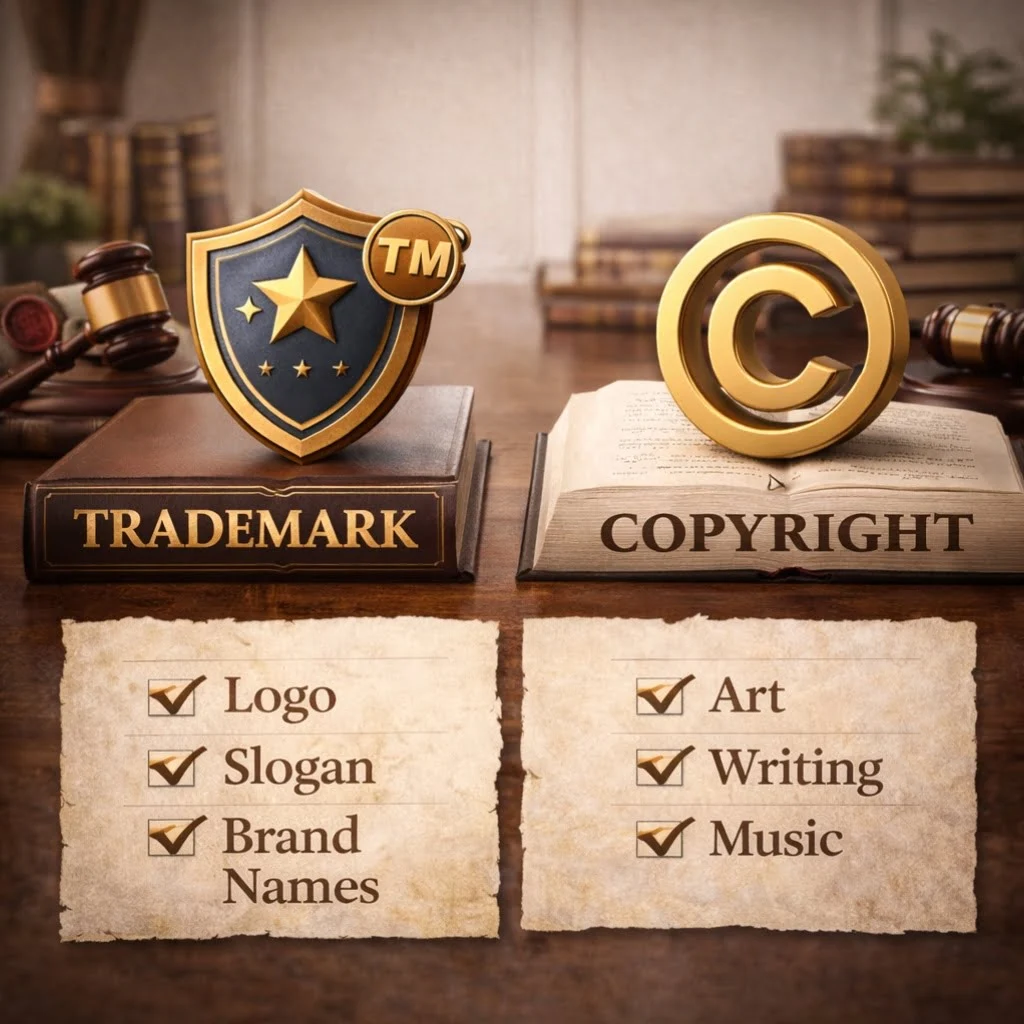
Any asset that functions as a source identifier for your business requires trademark protection rather than, or in addition to, copyright. This includes your company name, product names, service marks, taglines used in advertising, and any distinctive visual identity elements tied to commercial activity.
Copyright cannot protect a business name or brand phrase, regardless of how creative it may be. A business that relies solely on copyright to protect its brand name is legally exposed to competitors who could adopt the same name without infringing any copyright.
Situations Where Copyright Alone Leaves Your Commercial Identity Legally Vulnerable
A startup that designs an original logo automatically owns the copyright in that logo as an artistic work. However, without a trademark registration, competitors can adopt an identical or confusingly similar logo for their own business in the same industry. Copyright only prevents direct copying of the artistic work, not the use of similar branding concepts.
This gap is precisely why the Trademark vs Copyright distinction matters so much in commercial practice. Businesses that understand this gap take proactive steps to register trademarks for any brand element that carries commercial significance.
Overlapping Scenarios Where Both Protections May Apply Simultaneously
How a Single Creative Asset Such as a Logo Can Attract Both Trademark and Copyright
A logo that is both artistically original and used as a brand identifier can simultaneously attract copyright and trademark protection. The artistic expression within the logo is protected by copyright from the moment of creation. The logo’s function as a brand source identifier can be secured through trademark registration.
This dual protection provides layered security. Copyright prevents direct reproduction of the logo’s artwork. Trademark prevents competitors from using similar branding in the same commercial space, even if their version is not an exact copy.
Real-World Examples of Businesses That Successfully Utilise Dual Intellectual Property Protection
Major corporations routinely use both protections. The Nike Swoosh is a registered trademark and simultaneously protected by copyright as an original artistic design. The same applies to the Apple logo, Disney character illustrations, and countless other iconic brand assets.
Smaller businesses benefit equally from this approach. A craft brewery that creates a distinctive label illustration should register both the copyright in the artistic work and the trademark covering the brand name and logo used commercially. Both protections reinforce each other.
Common Mistakes Businesses Make When Confusing These Two Rights
Assuming Copyright Automatically Protects a Brand Name or Distinctive Business Logo
One of the most frequent errors in the Trademark vs Copyright context is assuming that copyright covers a business name. Names, titles, slogans, and short phrases generally do not qualify for copyright protection because they lack sufficient creative expression. A business name is not a literary work.
Many entrepreneurs invest significant resources in developing a brand identity, only to discover years later that they hold no trademark rights. This leaves them unable to stop competitors from using confusingly similar names in the same market.
Neglecting Trademark Registration After Investing Heavily in Copyrighted Brand Materials
Another common mistake involves businesses that commission original artwork, develop branding materials, and build customer recognition around a visual identity without ever filing a trademark application. They may own the copyright in the artwork, but they cannot prevent a competitor from operating under a similar brand identity in the same sector.
This oversight becomes particularly costly when a business seeks to expand geographically or franchise its operations, only to find that a competitor has already registered a similar trademark in the target market. Early trademark registration prevents these scenarios entirely.
Enforcement Powers and Legal Remedies Available Under Each Protection
Cease and Desist Actions, Injunctions, and Damages Available to Trademark Holders
Trademark holders can pursue a range of legal remedies against infringers. These include sending cease and desist letters demanding that the infringing use stop immediately, applying for court injunctions to prevent ongoing infringement, and claiming financial damages for losses suffered as a result of the infringement.
In cases of deliberate infringement, courts may award enhanced damages. Trademark holders can also pursue the destruction of infringing goods and, in some jurisdictions, recover their legal costs from the infringer. Border seizure of counterfeit goods is another powerful enforcement tool available to registered trademark owners.
Infringement Claims, Statutory Damages, and Licensing Disputes Under Copyright Law
Copyright holders similarly have strong enforcement options. They can bring infringement claims against anyone who reproduces, distributes, or publicly displays their work without authorisation. In jurisdictions where copyright has been formally registered, statutory damages are available without the need to prove actual financial loss.
Licensing disputes are also common in copyright enforcement. When a licensee exceeds the scope of their licence, the copyright holder can bring an infringement claim rather than a mere breach of contract claim, which typically offers more powerful remedies. Both trademark and copyright law provide robust but distinct enforcement frameworks.
Practical Steps to Determine Which Protection Suits Your Intellectual Property
A Step-by-Step Framework for Assessing Whether Your Asset Is a Brand Identifier or Creative Work
The first question to ask is whether the asset identifies the commercial source of goods or services. If yes, trademark protection is appropriate. The second question is whether the asset is an original creative expression fixed in a tangible medium. If yes, copyright applies.
If both answers are affirmative, as is often the case with logos and branded creative content, pursuing both forms of protection is the correct strategy. A structured intellectual property audit at the early stages of business development helps identify which assets need which protections before commercial activity exposes the business to risk.
When to Consult an Intellectual Property Solicitor Before Filing for Either Protection
Complex Trademark vs Copyright questions often benefit from professional legal advice. An intellectual property solicitor can conduct comprehensive clearance searches before trademark filing to ensure no conflicting marks exist. They can also advise on copyright ownership issues, particularly where works were created by employees or contractors.
Filing errors, incorrect class selection in trademark applications, and failure to respond to office actions can all result in wasted costs and lost protection. Professional guidance during the application process significantly increases the likelihood of successful registration and long-term protection of valuable intellectual assets.
Conclusion
The Trademark vs Copyright distinction is not a minor technical detail. It is a foundational principle of intellectual property law that determines how businesses protect their brands and how creators secure their work. Trademarks guard commercial identity in the marketplace, while copyright protects original expression from the moment of creation. Businesses that understand both protections and apply them strategically enjoy far greater legal security than those who rely on one alone. With careful planning, professional legal advice, and timely registration where required, both trademarks and copyright can work in concert to provide comprehensive, long-lasting protection for your most valuable intellectual assets.
FAQ
Can a business name be protected by copyright?
No. Business names, brand names, and short phrases do not qualify for copyright protection because they lack sufficient creative expression. A business name should be protected through trademark registration, not copyright.
Does copyright registration give me trademark rights?
No. Copyright registration and trademark registration are entirely separate processes that grant different legal rights. Registering copyright in a logo as an artistic work does not give you the exclusive commercial right to use that logo as a brand identifier. A separate trademark application is required for that purpose.
How long does copyright last compared to a trademark?
Copyright typically lasts for the lifetime of the creator plus 70 years in most jurisdictions. A registered trademark, by contrast, can last indefinitely as long as it is renewed every ten years and continues to be used in commerce.
Do I need to register my copyright to enforce it?
In most countries, copyright arises automatically and can be enforced without formal registration. However, in the United States, registration with the U.S. Copyright Office is required before filing an infringement lawsuit in federal court and enables the claiming of statutory damages.
Can a logo be both trademarked and copyrighted?
Yes. A logo that contains original artistic elements qualifies for copyright protection as an artistic work. When that same logo is used commercially as a brand identifier, it can also be registered as a trademark. This dual protection provides comprehensive coverage against both artistic copying and competitive brand confusion.
What happens if I use someone else’s trademark in a creative work?
Using a registered trademark in a creative work can constitute trademark infringement if it creates consumer confusion or implies sponsorship or endorsement by the trademark owner. Nominative fair use exceptions exist in some jurisdictions, but specific legal advice should be sought before using third-party trademarks in published works.
Who owns the copyright in a work created by an employee?
In many jurisdictions, works created by an employee in the course of their employment are owned by the employer under the “work made for hire” doctrine. However, works created by independent contractors may remain with the contractor unless a written agreement specifically transfers copyright ownership to the commissioning party.
Is it possible to lose trademark rights?
Yes. Trademark rights can be lost through non-use, failure to renew, abandonment, or if the mark becomes generic through widespread use without enforcement. Owners must actively police their trademarks and renew registrations to maintain protection. Copyright, by contrast, cannot be lost through inaction during its term.
What is the difference between TM, SM, and the R symbol?
The TM symbol indicates a claim to trademark rights without formal registration and applies to goods. The SM symbol is used similarly for services. The R-in-a-circle symbol indicates that the trademark is officially registered with the relevant intellectual property authority. Using the registered symbol without an actual registration is misleading and can have legal consequences.
When should a business file for both trademark and copyright protection?
A business should pursue both protections when an asset serves both as an original creative work and a commercial brand identifier. This commonly applies to logos, character designs, branded illustrations, and custom typefaces. Filing for trademark protection as early as possible is advisable, while copyright protection begins automatically at the point of creation.

Hamit Sahin is the founder and editor of LegalTerms.net. He researches U.S. legal terminology and publicly available legal information using statutes, court rules, judicial opinions, government publications, and established legal reference sources.
His work focuses on organizing complex legal concepts into clear, plain-English explanations for general educational purposes.
Hamit is not an attorney and LegalTerms.net does not provide legal advice.