What Is an Executory Contract?

An Executory Contract sounds technical, but the basic idea is simple: it is a contract that both sides still have meaningful duties left to perform. In other words, the deal is not fully finished yet. That unfinished status matters most in bankruptcy, where a court may decide whether the contract will be kept, assigned, or rejected.
For many readers, the confusion starts because almost every contract involves some future performance. You sign a lease, agree to a service plan, or enter a purchase agreement, and somebody still has to do something. But in legal use, not every active contract is treated the same way. The question is whether both parties still owe important performance, not just minor cleanup tasks.
Executory Contract meaning in plain English
In plain English, an executory contract is a contract that is still in progress on both sides. Each party has remaining obligations that matter to the agreement. If either side stopped performing, that failure would count as a material breach.
That last point is what makes the term more precise than just saying a contract is “ongoing.” If one side has already done everything important and is only waiting for payment, the contract may no longer be executory. By contrast, if a landlord must continue providing possession of property and the tenant must continue paying rent, both sides still have substantial duties. That is a classic example.
Courts often describe the term through the idea of material performance. If both sides still owe enough that nonperformance by either would be a serious problem, the contract is likely executory. If only one side has a major duty left, it may not be.
Why the term matters so much in bankruptcy
Outside bankruptcy, the phrase may not come up often for everyday consumers. In bankruptcy law, though, it is a key concept. A debtor in bankruptcy may be able to assume an executory contract, reject it, or sometimes assign it to someone else, depending on the type of case and the court’s approval.
That matters because bankruptcy is partly about deciding which ongoing obligations should continue and which should stop. If a business files bankruptcy while it is still tied to leases, supply contracts, franchise agreements, software licenses, or employment-related agreements, the court needs a framework for handling those unfinished deals.
If the debtor assumes the contract, it usually means the debtor chooses to keep it in force and continue performing. If the debtor rejects it, that generally means the debtor will not keep performing, and the rejection is treated as a breach. Assignment can allow the debtor to transfer the contract to another party, although some contracts have restrictions and some laws limit assignment.
This is why the label matters. Calling an agreement an Executory Contract is not just academic. It can affect whether the agreement survives bankruptcy and what rights the other party has.
Common examples of an executory contract
Leases are among the easiest examples. In a residential or commercial lease, the tenant still owes rent, and the landlord still owes possession and other lease duties. Both sides continue to perform over time.
Employment contracts can also be executory if the employee still must work and the employer still must pay wages or benefits. Installment sales agreements may qualify when the seller still has delivery or warranty obligations and the buyer still owes payments.
Service contracts are another common category. If a business agrees to provide ongoing marketing, maintenance, software support, or consulting services over several months, and the customer must continue paying, both parties likely still have material duties.
Licensing agreements can also fall into this category, though they can become more complicated. A software or intellectual property license may involve continuing use rights, quality control, royalty payments, and compliance obligations. Whether it is executory can depend on the exact contract language and the law applied.

Contracts that may not be executory
A fully completed sale usually is not executory. If a seller has already delivered the goods and the buyer only has to pay money, some courts may say the contract is no longer executory because only one side has major performance left.
The same logic applies when one party has substantially completed its work. Suppose a contractor finishes a project and the only dispute is whether the customer still owes the final invoice. That may be more of a payment claim than an executory contract issue.
Still, this is where legal classification gets less obvious. Some contracts include continuing warranties, indemnity duties, confidentiality promises, or post-closing obligations. A court may need to decide whether those remaining duties are substantial enough to keep the contract in the executory category.
The legal test is not always simple
The most widely cited approach asks whether both parties have remaining obligations so important that failure by either one would be a material breach. That sounds straightforward, but real contracts are messy. What counts as material can depend on the state law governing the contract, the wording of the agreement, and the context of the dispute.
For example, one court may view ongoing reporting duties as minor, while another may treat them as central to the bargain. Some courts apply the traditional material-breach test strictly. Others look more broadly at the purpose of bankruptcy law and the practical effect of keeping or rejecting the contract.
That means two contracts that look similar at first glance may be treated differently. It also means that if a bankruptcy case turns on this issue, the answer often depends on more than the contract title alone.
Assume, reject, or assign: what those words mean
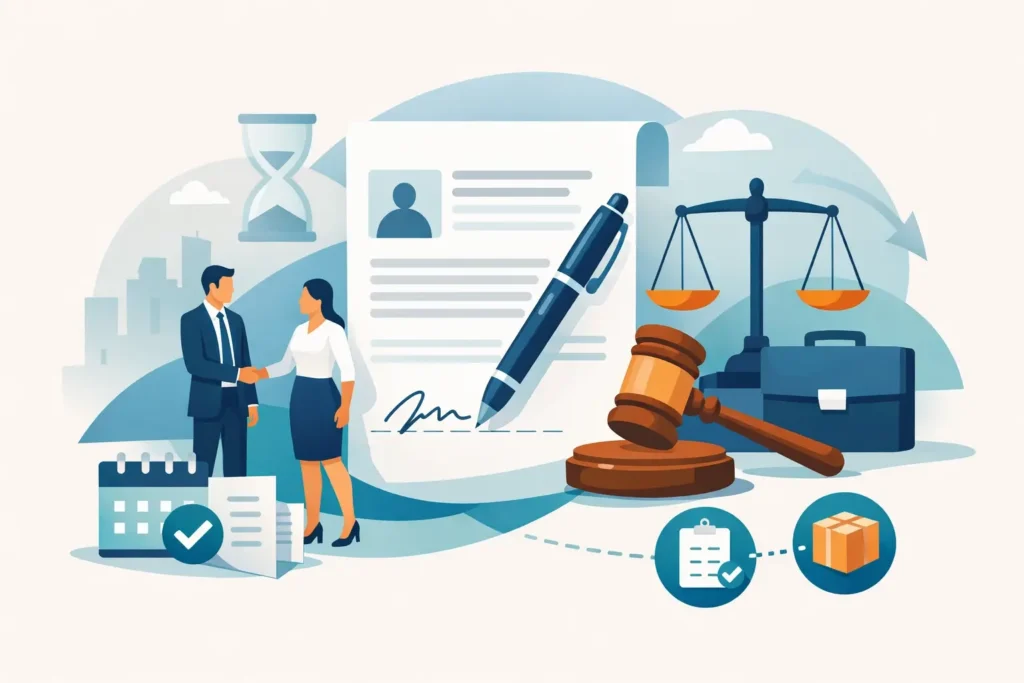
When a bankruptcy debtor assumes an executory contract, the debtor is choosing to continue the agreement. Usually, the debtor must cure existing defaults or provide assurance that defaults will be cured. The idea is that the other party should not be forced to continue under a contract while old breaches remain unresolved.
When the debtor rejects the contract, the debtor is deciding not to continue it. Rejection is generally treated as a breach, not as if the contract never existed. That distinction matters because the non-debtor party may have a claim for damages, but that claim may be handled as part of the bankruptcy process rather than collected in the usual way.
Assignment means transferring the contract to another party. This can be valuable if the contract itself has business value, such as a favorable lease or supply agreement. But assignment is not automatic. Some contracts and legal rules limit whether rights and duties can be transferred, especially where personal trust, specialized skill, or consent is central.
Why this matters outside of bankruptcy too
Even if you never file bankruptcy, understanding executory contracts can help you read legal documents more clearly. Many disputes turn on whether a contract is still active, whether both sides still owe performance, and what happens if one side stops.
For small business owners, this can matter in vendor agreements, office leases, subscription contracts, and long-term customer arrangements. For workers and consumers, it can matter in employment agreements, rent obligations, service memberships, and installment purchases.
The concept also helps explain why some contract rights feel more immediate than others. An unfinished contract creates ongoing risk. If one side becomes insolvent, refuses to perform, or tries to walk away, the other side may not just lose money. They may also lose future access to property, services, inventory, or business relationships they were counting on.
A simple example
Imagine a company signs a two-year copier lease. The leasing company must continue providing the equipment under the lease terms, and the business must continue making monthly payments. Halfway through the lease, the business files bankruptcy.
That lease is likely an executory contract because both sides still owe meaningful performance. The business may ask to assume the lease if it wants to keep using the copier, or reject it if the lease has become too expensive. The leasing company, meanwhile, will want to know whether it will keep receiving payments or instead be left with a damages claim.
Now compare that with a one-time purchase where the copier was already delivered months ago and the only issue is an unpaid invoice. That may look more like a completed sale with a remaining payment obligation, not an executory contract.
One word of caution
People sometimes use “executed” and “executory” as opposites, but they are easy to mix up. An executed contract is generally one that has been fully performed, while an executory contract still has important obligations left. A contract can also be “executed” in another sense, meaning it was signed properly. That overlap in wording causes a lot of confusion.
If you are reading a contract notice, bankruptcy filing, or court paper and you see the term Executory Contract, focus on the practical question: what important duties are still left on both sides? That usually gets you closer to the real issue than the label alone.
For readers who use Legal Terms to decode legal language quickly, this is one of those phrases that sounds harder than it is. Once you strip away the jargon, an executory contract is simply an unfinished deal where both sides still have real work left to do.
Do you have any questions? Feel free to reach out to us via our WhatsApp line.

Hamit Sahin is the founder and editor of LegalTerms.net. He researches U.S. legal terminology and publicly available legal information using statutes, court rules, judicial opinions, government publications, and established legal reference sources.
His work focuses on organizing complex legal concepts into clear, plain-English explanations for general educational purposes.
Hamit is not an attorney and LegalTerms.net does not provide legal advice.