
What Is a Nulla Bona Return?
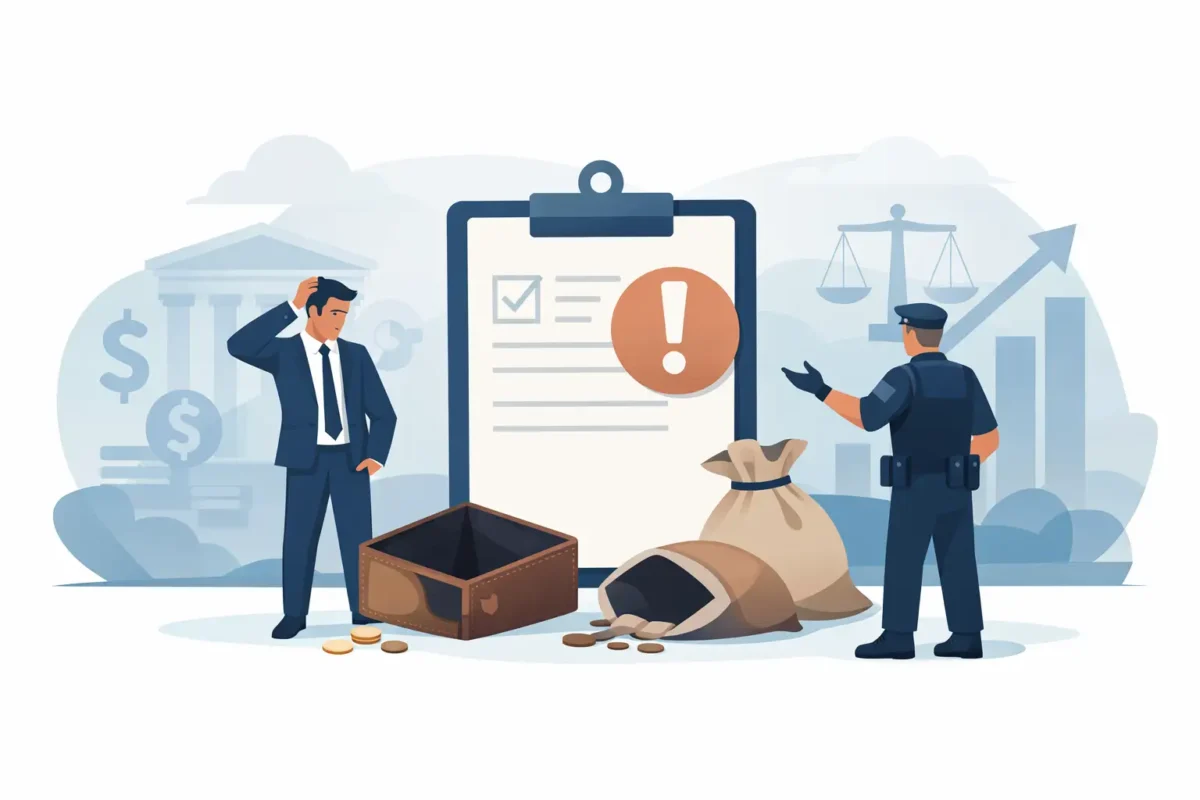
If you came across the phrase what is nulla bona return? on a court document or in a debt collection case, the short answer is this: it means a sheriff, marshal, or other officer tried to collect a judgment but could not find property to seize. In plain English, the officer is reporting back to the court that the person who owes the debt appears to have no reachable assets.
That sounds simple, but the term can carry real consequences. A nulla bona return may affect how a creditor tries to collect, what happens next in court, and how a debtor understands the seriousness of a judgment.
What is a nulla bona return in plain English?
“Nulla bona” is Latin for “no goods.” A nulla bona return is the written return, or report, made after an officer attempts to enforce a judgment and cannot find non-exempt property belonging to the debtor.
The word “return” here does not mean money being returned. It means the officer’s official report back to the court or to the party that requested enforcement. So when someone asks, “what is a nulla bona return?” they are really asking what it means when a collection effort comes back marked “no goods” or “no property found.”
This usually happens after a creditor has already won a civil judgment. At that point, the creditor may ask the court to issue a writ of execution or similar order allowing an officer to locate and seize certain property to satisfy the debt. If the officer cannot find property that can legally be taken, the return may state nulla bona.
Where this shows up in real cases
A nulla bona return most often appears in post-judgment collection. That means the lawsuit is already over, at least on the question of whether money is owed. The remaining issue is collection.
For example, imagine a small business sues a customer for unpaid invoices and wins a money judgment. The business then tries to enforce that judgment. A sheriff is directed to levy on the debtor’s non-exempt personal property, but after making reasonable efforts, the officer finds nothing available to seize. The officer files a nulla bona return.
It can also appear in older court records, creditor suits, and supplementary proceedings where a creditor is trying to identify assets. In some jurisdictions, the exact wording may vary. You may see phrases like “no property found,” “unsatisfied execution,” or similar language instead of the Latin term.
What a nulla bona return does and does not mean
This is where people often get confused. A nulla bona return does not necessarily mean the debtor owns absolutely nothing. It means the officer did not find property that could be reached through that particular enforcement effort.
There are several reasons that can happen. The debtor may truly have no valuable assets. The debtor may own only exempt property, such as certain household goods, retirement funds, or other items protected by state or federal law. The property may be hard to locate, jointly owned, already encumbered, or outside the officer’s reach. Timing also matters. A person may have assets later even if none are available now.
So a nulla bona return is not a final declaration that collection is impossible forever. It is a report about the result of one attempted execution.
Why creditors care about a nulla bona return
For a creditor, a nulla bona return is frustrating, but it is also useful. It creates a formal record showing that an execution was attempted and came back unsatisfied.
That record can matter because some states require a creditor to take certain collection steps before using stronger remedies. A nulla bona return may support later efforts such as debtor examinations, garnishment, supplementary proceedings, or allegations that assets were hidden or transferred improperly. In some situations, it may also help establish that ordinary collection efforts have failed.
It can also influence strategy. If direct seizure of property did not work, a creditor may shift focus to wages, bank accounts, business receivables, or discovery tools designed to uncover assets.
Why debtors should pay attention to it
If you are the judgment debtor, a nulla bona return is not a free pass. It does not erase the judgment, and it does not mean the debt has disappeared.
A judgment can often remain enforceable for years, sometimes with interest added. If a creditor could not collect today, the creditor may try again later. The next attempt might involve wage garnishment, a bank levy, a judgment lien, or court-ordered questioning about assets.
At the same time, a nulla bona return can signal something important: the creditor has already moved beyond simply asking for payment. The case is now in the enforcement stage, which is more serious and more procedural. That is why readers who use Legal Terms often want the plain-English version first, then the practical context.
How the process usually works
The exact procedure depends on state law, but the general sequence is fairly consistent.
First, the creditor wins a money judgment. Second, the creditor requests an enforcement order, often called a writ of execution. Third, a sheriff, marshal, constable, or similar official attempts to locate and levy property that can legally be used to satisfy the judgment. If no reachable property is found, the officer files a return stating that the writ was unsatisfied, sometimes using the term nulla bona.
That filing becomes part of the case record. From there, the creditor decides what to do next.

Nulla bona return vs. unsatisfied judgment
These terms are related, but they are not identical. A nulla bona return is a specific report about an unsuccessful effort to find property. An unsatisfied judgment is the broader reality that the debt has not been paid.
A judgment can be unsatisfied even without a nulla bona return. For example, a creditor might never attempt a levy, or might focus instead on garnishment. On the other hand, a nulla bona return is one common way the record may show that the judgment remains unpaid after an enforcement attempt.
Nulla bona return vs. exempt property
This distinction matters a lot for non-lawyers. A person may own property and still receive a nulla bona return if that property is exempt from seizure.
Exemption laws protect certain assets from creditors, though the rules vary by state and by the type of debt. Common examples can include some home equity, basic personal belongings, tools of a trade, public benefits, and retirement accounts. So if an officer reports nulla bona, it may reflect legal protection of assets rather than total insolvency.
That is one reason the phrase should not be overread. It tells you something important, but not everything.
Can a creditor still collect after a nulla bona return?
Yes. In many cases, a creditor can continue trying to collect as long as the judgment is still valid under state law.
The creditor may look for income instead of physical property. Wages and bank accounts are common targets, although both are subject to legal limits and exemptions. The creditor may also use post-judgment discovery, which can include written questions, document requests, or an order requiring the debtor to appear in court and answer questions about finances.
If the creditor suspects assets were hidden, transferred to relatives, or moved to avoid collection, that can create additional legal issues. Whether those claims succeed depends on facts, timing, and state law.
Does a nulla bona return mean someone is judgment-proof?
Not always. “Judgment-proof” is an informal term people use when a debtor has no practical assets or income that a creditor can collect. A nulla bona return may point in that direction, but it does not prove it.
Someone may be temporarily difficult to collect from, not permanently judgment-proof. A person can change jobs, inherit money, buy property, open a bank account, or otherwise become easier to reach later. On the other hand, some people do have only exempt income and exempt assets, making collection very limited in practice.
This is one of those areas where the answer depends on the details.
What to do if you see this term on a case record
If you are the creditor, read the full filing carefully. The exact wording may show whether service was attempted, whether property was searched for, and whether the writ was returned wholly or partly unsatisfied. That helps determine the next collection step.
If you are the debtor, do not assume the matter is over. Check whether the judgment is still active, whether interest is accruing, and whether there are upcoming hearings or asset disclosure requirements. If your income or property may be exempt, that question becomes especially important.
If you are simply trying to understand a court record, the key takeaway is straightforward: a nulla bona return means an officer tried to enforce a money judgment and did not find property available to seize.
Why the term still matters
This is an old phrase, but it survives because it captures a specific legal result in just two words. Courts and collection systems still need a formal way to say, “We tried to collect through seizure of property, and there was nothing we could lawfully take.”
For most readers, the value is not in memorizing the Latin. It is in understanding the stage of the case. Once you know what a nulla bona return means, the court record becomes much easier to read, and the next steps in the process make more sense.
If you run into this term, focus less on the Latin and more on what it tells you about the collection effort, because that is where the real meaning is.
Q&A
Question: What is a nulla bona return in simple terms?
Short answer: A nulla bona return means that a court officer could not find any assets belonging to the debtor to collect a debt. It shows that enforcement efforts failed at that time, but the debt still exists and can be pursued later.
Question: Does a nulla bona return mean the debtor has no money at all?
Short answer: Not necessarily. It only means no legally reachable assets were found during the enforcement process. The debtor may still have hidden assets or may gain assets in the future.
Question: What happens after a nulla bona return is issued?
Short answer: The creditor can explore other legal options such as investigating the debtor’s finances, requesting court disclosures, or trying enforcement again later if the debtor’s situation changes.
Question: Can a creditor try to collect the debt again after a nulla bona return?
Short answer: Yes. A nulla bona return does not end the case. Creditors can attempt collection again in the future, especially if the debtor acquires new assets or income.
Question: Is a nulla bona return the same as canceling the debt?
Short answer: No. The debt remains legally valid. The return only indicates that no assets were found at the time of enforcement, not that the obligation has been removed.
Question: Does a nulla bona return affect the debtor legally or financially?
Short answer: Yes. While it does not directly penalize the debtor, the unpaid judgment can impact credit records and lead to continued legal pressure or future enforcement actions.
Do you have any questions? Feel free to reach out to us via our WhatsApp line.

Hamit Sahin is the founder and editor of LegalTerms.net. He researches U.S. legal terminology and publicly available legal information using statutes, court rules, judicial opinions, government publications, and established legal reference sources.
His work focuses on organizing complex legal concepts into clear, plain-English explanations for general educational purposes.
Hamit is not an attorney and LegalTerms.net does not provide legal advice.









https://legalterms.net/tolling-of-statute/