What Is Vicarious Liability?

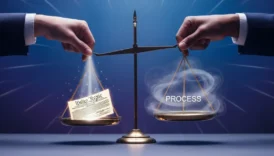
In law, people and organizations are not always liable only for their own actions. Sometimes, they can also be held responsible for the wrongful acts of others. This concept is called vicarious liability, and it is especially common in employment, business, and agency relationships.
Simple Definition
Vicarious liability is a legal principle that holds one party responsible for the actions or omissions of another, typically because of a special relationship (such as employer-employee).
Real-Life Examples
- Employer liability: A delivery driver negligently causes an accident while working. The employer may be held liable.
- Partnerships: If one partner commits fraud in the course of business, the other partners may also be liable.
- Schools: A school may be held liable for negligence by its staff.
- Parent-child: In limited cases, parents can be liable for damages caused by their minor children.
Importance of the Term
- Protects victims: Ensures they can recover compensation from parties with resources, not just individuals.
- Encourages responsibility: Employers and organizations must supervise and train workers properly.
- Balances risk: Distributes liability between those who benefit from the work and those who perform it.
- Strengthens accountability: Creates shared responsibility for actions taken within a relationship.
Vicarious Liability vs. Direct Liability
| Factor | Vicarious Liability | Direct Liability |
|---|---|---|
| Basis | Responsibility for another’s actions | Responsibility for one’s own actions |
| Example | Employer liable for employee’s negligence | Employer personally fails to provide safety |
| Legal focus | Relationship between parties | Personal conduct or negligence |
FAQ
1) Does vicarious liability require fault by the liable party?
No. It applies because of the relationship, not because the party was directly at fault.
2) Is vicarious liability automatic in all relationships?
No. It usually applies to specific relationships like employer-employee or principal-agent.
3) Can employers avoid vicarious liability?
They may limit risks through proper training, supervision, and insurance, but they cannot usually contract out of liability.
4) Is vicarious liability the same worldwide?
No. Different jurisdictions apply it in varying ways, though the employer-employee model is widely recognized.
5) Why is vicarious liability important in employment law?
Because it protects injured parties by ensuring compensation from employers, who are more financially secure than individual employees.
Closing
Vicarious liability is a key principle in civil law that ensures fairness and accountability. By holding employers and other parties responsible for those acting under their authority, it balances justice for victims and encourages organizations to uphold high standards of supervision.

Hamit Sahin is the founder and editor of LegalTerms.net. He researches U.S. legal terminology and publicly available legal information using statutes, court rules, judicial opinions, government publications, and established legal reference sources.
His work focuses on organizing complex legal concepts into clear, plain-English explanations for general educational purposes.
Hamit is not an attorney and LegalTerms.net does not provide legal advice.