Can a Minor Be Tried as an Adult?
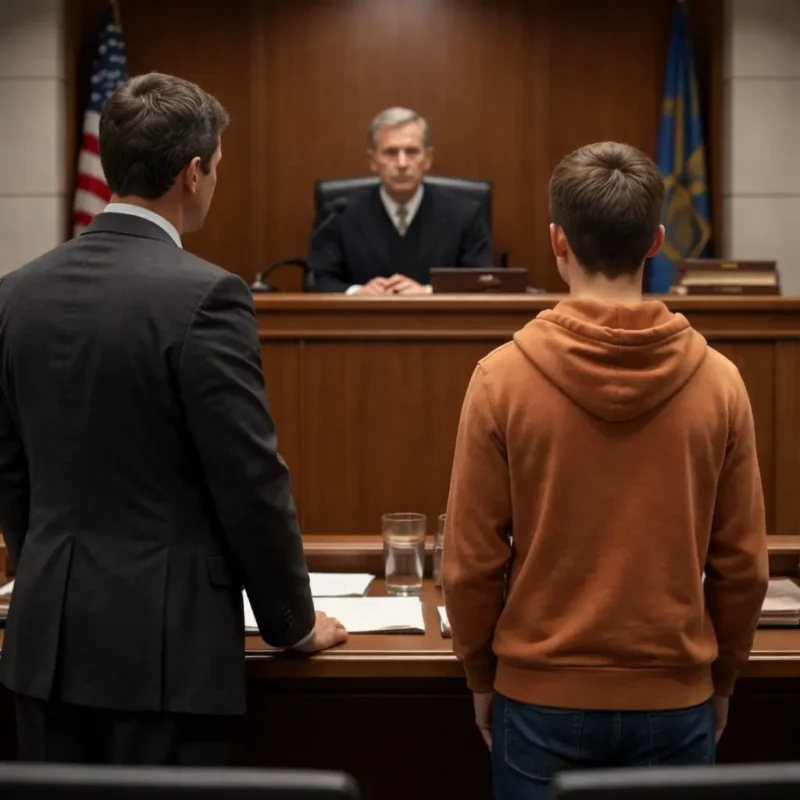
Whether a minor can be tried as an adult is a complex legal question that depends on the nature of the offense, the age of the defendant, and the laws of the jurisdiction involved. In certain circumstances, courts may allow or require juveniles to be prosecuted in adult criminal court rather than juvenile court.
Legal Distinction Between Juvenile and Adult Courts
The juvenile justice system was established to focus on rehabilitation rather than punishment. Juvenile courts typically emphasize education, treatment, and reintegration into society, reflecting the belief that minors lack the full maturity and judgment of adults.
Adult criminal courts, by contrast, are designed to impose punishment, deterrence, and public accountability. When a minor is tried as an adult, the case moves out of the juvenile system, exposing the defendant to adult criminal procedures and, potentially, adult sentencing.
This distinction is critical, as it determines not only how the trial is conducted but also the long-term consequences of a conviction.
General Rule: Minors Are Tried in Juvenile Court
As a general principle, individuals under the age of 18 are handled within the juvenile justice system. Juvenile courts have exclusive jurisdiction over most offenses committed by minors, particularly nonviolent or lower-level crimes.
However, this general rule is subject to significant exceptions. Legislatures and courts recognize that certain offenses or circumstances may justify treating a juvenile offender as an adult, especially when public safety concerns are involved.
Circumstances Allowing a Minor to Be Tried as an Adult
A minor may be tried as an adult when statutory or judicial mechanisms permit transfer from juvenile court to adult criminal court. These mechanisms vary by jurisdiction but commonly include:
- Judicial waiver, where a judge decides that the case should be transferred after considering factors such as the severity of the offense and the minor’s criminal history.
- Prosecutorial discretion, allowing prosecutors to file certain cases directly in adult court.
- Statutory exclusion, where specific serious offenses are automatically excluded from juvenile court jurisdiction.
These mechanisms reflect a policy judgment that some crimes are so serious that juvenile court treatment may be inadequate.
Factors Courts Consider in Transfer Decisions
When a judge evaluates whether a minor should be tried as an adult, several factors are typically examined. Courts often assess the seriousness of the offense, including whether it involved violence or resulted in serious harm.
The minor’s age, prior record, and demonstrated maturity are also relevant. Courts may consider whether the juvenile system can provide appropriate rehabilitation before the minor reaches adulthood. In some cases, psychological evaluations or expert testimony may inform the court’s decision.
The goal of this analysis is to balance the interests of public safety with the rehabilitative aims of juvenile justice.
Age Thresholds and Jurisdictional Differences
The minimum age at which a minor may be tried as an adult varies significantly by jurisdiction. Some jurisdictions set a specific age threshold—such as 14 or 16—below which adult prosecution is prohibited. Others allow adult prosecution at younger ages for particularly serious offenses.
Additionally, the type of offense plays a major role. Violent felonies, such as homicide or aggravated assault, are more likely to trigger adult prosecution than nonviolent crimes.
Because of these variations, whether a minor can be tried as an adult depends heavily on local law.
Immediate Legal Consequences of Adult Prosecution
When a minor is tried as an adult, the procedural protections and potential penalties change substantially. The case follows adult criminal procedure, including public court proceedings and adult evidentiary standards.
If convicted, the minor may face harsher sentences than those available in juvenile court. In some jurisdictions, adult convictions may also create a permanent criminal record, affecting education, employment, and civil rights.
These consequences underscore the seriousness of transferring a juvenile case to adult court.
Sentencing Differences and Legal Limitations
When a minor is tried as an adult, sentencing rules may differ significantly from those applied in juvenile court. Juvenile systems typically impose age-limited dispositions focused on rehabilitation, often ending when the individual reaches a certain age. Adult courts, however, operate under sentencing frameworks designed for fully responsible offenders.
That said, many jurisdictions impose legal limitations on sentencing minors as adults. Courts may restrict the use of the most severe penalties, recognizing constitutional and developmental concerns. In particular, life sentences without parole and mandatory minimums for juveniles have been subject to heightened judicial scrutiny.
Even when adult sentencing applies, some legal systems allow blended or hybrid sentences, combining elements of juvenile rehabilitation with adult accountability.
Constitutional Considerations and Supreme Court Guidance
The question of trying minors as adults is closely tied to constitutional principles, especially those concerning due process and proportional punishment. Courts have increasingly recognized that minors differ from adults in terms of cognitive development, impulse control, and susceptibility to influence.
Judicial decisions have emphasized that these differences must be considered when determining culpability and punishment. As a result, constitutional doctrine often limits the extent to which minors can be punished in the same manner as adults, even when adult prosecution is permitted.
These rulings do not prohibit trying minors as adults outright but require courts to apply heightened care when imposing penalties.
Rehabilitation Versus Punishment Debate
A central policy debate surrounding adult prosecution of minors concerns the balance between rehabilitation and punishment. Advocates of juvenile court jurisdiction argue that minors are more capable of change and that rehabilitative approaches reduce recidivism.
Supporters of adult prosecution emphasize public safety and accountability, particularly in cases involving serious violence. They argue that certain offenses demonstrate a level of harm that justifies adult-level consequences.
Courts and lawmakers continue to navigate this tension, often seeking compromise through discretionary transfer mechanisms and sentencing limitations.
Long-Term Impact on Minors Tried as Adults
Being tried as an adult can have lasting effects on a minor’s life. Adult criminal convictions may result in permanent records that affect employment, housing, education, and civic participation. Public proceedings may also expose minors to social stigma.
Research has suggested that minors prosecuted in adult courts may face higher risks of reoffending compared to those handled within juvenile systems. These findings have influenced policy discussions but have not eliminated adult prosecution as a legal option.
The long-term consequences highlight the importance of careful judicial assessment before transferring a case.
Comparative Perspective Across Jurisdictions
Internationally, approaches to prosecuting minors vary widely. Some legal systems strictly prohibit adult prosecution of juveniles, regardless of offense severity. Others permit adult trials under limited circumstances, often with strong sentencing safeguards.
These comparative models demonstrate that there is no single global standard. Instead, each jurisdiction balances developmental considerations, public safety, and legal tradition differently.
Practical Implications for Legal Proceedings
From a procedural standpoint, determining whether a minor can be tried as an adult is often a critical early issue in a case. Defense counsel may challenge transfer decisions, while prosecutors may argue for adult jurisdiction based on statutory criteria.
Judicial hearings addressing transfer or waiver questions can shape the entire course of litigation. The outcome affects not only trial procedure but also potential sentencing exposure and long-term consequences.
FAQ
Can any minor be tried as an adult?
No. Adult prosecution is limited by age thresholds, offense type, and jurisdictional law.
Does being tried as an adult mean automatic adult sentencing?
Not always. Some jurisdictions impose sentencing limits or allow blended sentences for minors.
Who decides whether a minor is tried as an adult?
Depending on the jurisdiction, the decision may be made by a judge, prosecutor, or statute.
Are juvenile records treated differently from adult records?
Yes. Juvenile records are often sealed or expunged, while adult records are typically permanent.
LegalTerms.net provides verified legal definitions and procedural explanations for academic and educational reference.
ToC Of Can a Minor Be Tried as an Adult?

LegalTerms.net Editorial Staff produces plain-English explanations of legal terminology for general educational purposes. Content is developed through a structured research process using publicly available legal resources, including statutory frameworks, case law databases, and authoritative legal publications.
All articles are reviewed for clarity, factual consistency, and alignment with widely accepted legal standards before publication. Content does not constitute legal advice.
Learn how our content is created: Content Methodology · Editorial Guidelines · Legal Sources