What Is Tolling of Statute? A Plain-English Guide
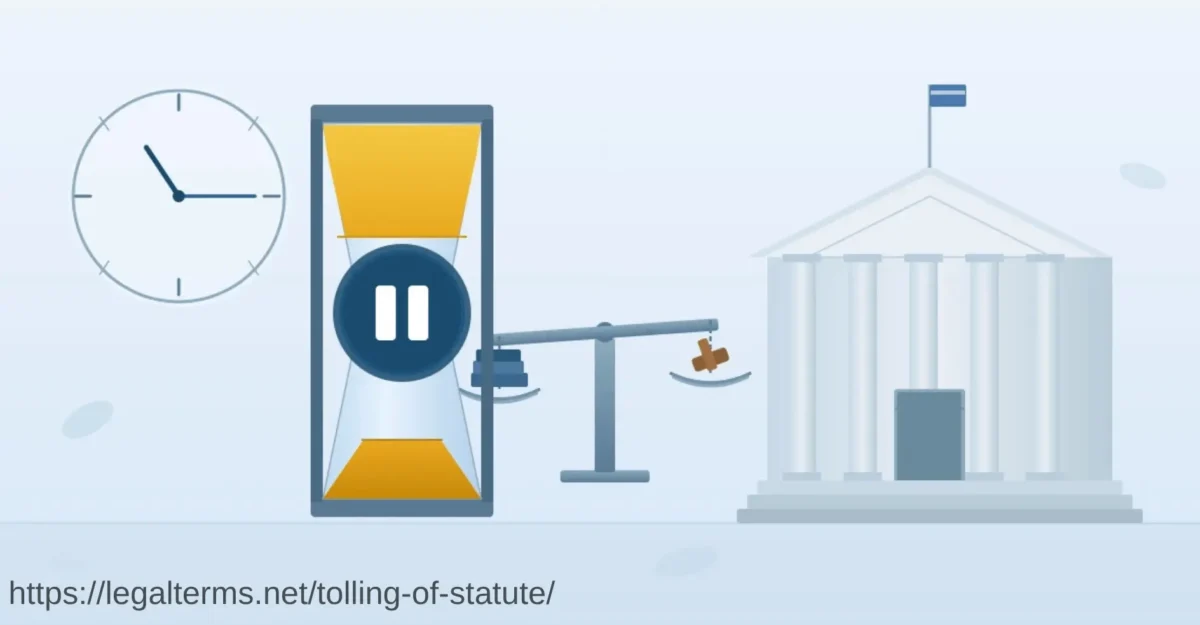
Miss a legal deadline, and your case may be over before it starts. That is why the tolling of statute matters. In plain English, tolling means the legal clock stops running for a period of time, which can extend the deadline to file a lawsuit, bring a claim, or in some situations continue a criminal case.
People usually run into this term when they are reading about statutes of limitations. A statute of limitations is the time limit for taking legal action. Tolling does not erase that time limit. It pauses it. Once the tolling period ends, the clock starts again.
This sounds simple, but the details can get tricky fast. Tolling rules depend on the type of case, the state, and the reason the deadline was paused. A court will not always agree that tolling applies just because someone had a good reason for waiting.
Tolling of Statute in plain English
The easiest way to understand tolling is to think of a countdown timer. If the law gives someone two years to file a claim, the timer starts when the claim accrues, which usually means when the injury, breach, or harm happened, or when the person legally should have discovered it. If tolling applies for six months, the timer stops during that six-month period. The person may then have six extra months to file.
For example, imagine a person has two years to sue for an injury. One year passes. Then a legally recognized tolling event stops the clock for four months. After the tolling ends, the person still has one year left, not just eight months.
That is the core idea: tolling pauses the running of the statutory period. It is different from changing the law itself, and it is different from simply asking a court for more time because of hardship.
Why tolling exists
Tolling exists because rigid deadlines can produce unfair results. Lawmakers and courts recognize that some people cannot reasonably protect their rights during certain periods. In those situations, the law may pause the deadline rather than punish someone for circumstances outside their control.
At the same time, statutes of limitations serve an important purpose. They encourage people to act promptly, preserve evidence, and prevent very old claims from being litigated when memories have faded and records are gone. Tolling is the exception, not the rule.
That balance matters. Courts often require a clear legal basis for tolling, because extending deadlines can affect both sides. The person bringing the claim gets more time, but the defendant loses some of the certainty that deadlines are supposed to provide.
Common situations where a statute may be tolled
The most common tolling situations come from statutes and court decisions. The exact rules vary, but several patterns show up again and again.
A person’s minority can toll a statute. If the injured person is a child, many states pause certain filing deadlines until the person turns 18 or until another legally defined point. That does not apply to every kind of claim, and some states put an outside cap on how long a case can be delayed.
Mental incapacity can also toll a deadline. If someone is legally incompetent or unable to understand or manage their legal affairs, the law may stop the clock for a time. Again, this depends heavily on state law and on how incapacity is defined.
Fraudulent concealment is another common example. If a defendant actively hides wrongdoing and prevents the injured person from discovering the claim, a court may toll the statute until the claim was discovered or reasonably should have been discovered. This often comes up in fraud, professional misconduct, and product-related cases.
The discovery rule is related but slightly different. In some cases, the statute does not begin to run until the injury is discovered or should have been discovered. Strictly speaking, that is sometimes treated as a rule about when the claim starts rather than a tolling rule, but regular readers often see the two discussed together because both can extend the filing window.
A defendant’s absence from the state may toll the statute in some jurisdictions. Historically, if the defendant could not be served because they were out of state, the clock might pause. Modern service rules have narrowed the need for this in many places, but the concept still appears in some statutes.
Bankruptcy can create a tolling effect in certain situations. When a bankruptcy stay prevents a lawsuit from moving forward, deadlines may be suspended or extended by law. This area is technical, but it is a real-world example of how another legal process can affect time limits.
Emergency orders can also matter. During major disruptions such as natural disasters or the COVID-19 pandemic, some courts and governments temporarily tolled filing deadlines. Those were not automatic everywhere, and the exact start and end dates mattered a great deal.
Tolling vs extending a deadline
People often use these ideas interchangeably, but they are not always the same.
Tolling usually means the clock stops, then resumes later from where it left off. An extension usually means a new due date is added or moved. In practice, both can give someone more time, but the legal mechanics are different.
That difference can matter in court. If a filing period was tolled for 30 days, the calculation may differ from a rule that simply adds 30 days after a triggering event. Lawyers and judges pay close attention to that distinction because a case can turn on a small counting error.
Equitable tolling and why it is harder to get
Some tolling rules are written directly into statutes. Others come from equity, which is the court’s power to prevent unfairness in unusual cases. This is called equitable tolling.
Equitable tolling is not automatic. A person usually has to show both diligence and an extraordinary circumstance that prevented timely filing. In simple terms, they must show they were trying to protect their rights, but something serious stood in the way.
For example, courts may consider equitable tolling where a person filed in the wrong forum in good faith, was misled by official misconduct, or faced barriers that made timely filing effectively impossible. But ordinary confusion, ignorance of the law, or procrastination usually is not enough.
This is one of the biggest misconceptions around tolling. Many people assume a fair reason for delay will automatically pause the statute. Often it will not. Courts tend to apply equitable tolling narrowly.
Does tolling apply in criminal cases too?
Yes, and in some situations it matters more in criminal cases than in civil ones. The stakes are higher, the rules are stricter, and the consequences of a missed deadline can be severe on both sides.
Criminal statutes of limitations set the window during which the government must bring charges. If that window closes without an indictment or formal charge, the case is generally barred, no matter how strong the evidence. Tolling can extend that window, but only when a specific legal basis exists for doing so.
The most common example is a defendant who flees the jurisdiction or cannot be located. Many states and federal statutes pause the limitations period while the person is a fugitive, actively evading arrest, or living outside the jurisdiction where the crime occurred. The reasoning is straightforward: the government should not lose its ability to prosecute simply because the defendant made themselves unavailable. Once the person is located or returns, the clock resumes from where it stopped.
Concealment of identity works similarly in some jurisdictions. If the perpetrator’s identity was unknown and could not reasonably have been discovered, certain statutes allow the period to be tolled until the identity becomes known or reasonably discoverable. This has become more relevant with advances in DNA evidence, where crimes from decades ago have been linked to identifiable individuals.
Some offenses carry no statute of limitations at all. Murder is the clearest example, but many states also have no time limit for certain sexual offenses, kidnapping, terrorism-related crimes, and offenses involving public officials. When there is no limitations period, tolling is beside the point. The government can charge at any time regardless of how much time has passed.
For offenses that do have a limitations period, tolling in criminal cases is subject to constitutional limits that do not apply in civil matters. The Sixth Amendment right to a speedy trial and due process protections mean that even where tolling is technically available, an unreasonable delay in bringing charges can still result in dismissal. A court can acknowledge that the statute was tolled but still find that the delay violated the defendant’s constitutional rights.
Evidence reliability is another concern that runs through criminal tolling cases. Courts are aware that memories fade, witnesses become unavailable, and physical evidence degrades over time. Those practical concerns do not automatically block prosecution, but they influence how courts and juries evaluate older cases that were revived through tolling.
The criminal tolling rules that apply to any specific case depend on the offense charged, the governing statute, the jurisdiction, and the specific facts of why prosecution was delayed. Anyone facing charges in a case where the timing of prosecution is an issue should treat that question as one requiring careful legal analysis, not general assumptions about how limitations periods work.
How courts decide whether tolling applies
Courts usually start with the text of the statute. If a state law says the limitation period is tolled during minority, incapacity, or concealment, the court applies that language first. If the law is unclear, the court may look at prior cases interpreting the rule.
The facts also matter. A tolling argument often rises or falls on documentation and timing. When did the injury happen? When was it discovered? What steps did the plaintiff take? Was there active concealment? Was the person legally disabled under the statute, or just struggling in a more general sense?
Because tolling can save or destroy a case, judges often examine it closely before the case ever reaches the merits. A lawsuit may be dismissed as time-barred if the court decides tolling does not apply.
Real-world example
Suppose a contractor performs defective work on a home, but hides the problem behind a wall. The homeowner does not learn about the defect until water damage appears three years later. If state law uses a discovery rule or allows tolling for fraudulent concealment, the homeowner may still be able to sue even though more than three years have passed since the work was done.
Now change the facts. Suppose the damage was visible much earlier, and a reasonable person would have investigated. In that situation, the homeowner may have a weaker argument. Tolling often depends not just on what was hidden, but on what the injured person reasonably should have known.
A few cautions for anyone dealing with a filing deadline
Tolling can sound reassuring, but it is risky to assume it applies. Deadlines in law are unforgiving, and tolling rules are often narrower than people expect. Small differences in state law, claim type, and timing can completely change the result.
That is why Legal Terms and similar educational resources explain tolling as a concept, not as a guarantee. If a deadline might be close, the safest move is to treat the shortest possible filing period as the one that controls until you confirm otherwise.
A helpful way to think about tolling is this: it is a legal pause button, but only when a statute or court-recognized rule says the button exists. If you are reading the term in a case, contract dispute, injury claim, or criminal matter, the next question is always the same – what specific law or doctrine is doing the tolling here?
State-by-state tolling rules
Tolling rules vary significantly from one state to another, and that variation can determine whether a claim survives or gets dismissed. What pauses the clock in one state may not pause it in another. A few examples show how wide that gap can be.
In California, the statute of limitations is tolled during minority, meaning a child has until age 18 plus the applicable limitations period to bring most civil claims. California also recognizes tolling for legal disability, imprisonment, and the absence of a defendant from the state. For medical malpractice claims specifically, California applies a three-year outside limit regardless of tolling, which means equitable arguments have a ceiling.
In New York, tolling for infancy applies broadly, but the state imposes a strict ten-year outside cap on most tolled claims. New York courts apply equitable tolling narrowly and require a clear showing of fraudulent concealment or extraordinary circumstances. In certain contract and property disputes, tolling arguments face additional procedural hurdles that do not exist in other states.
In Texas, the discovery rule operates more restrictively than in many other states. Texas courts have historically required plaintiffs to show that the nature of the injury itself concealed the claim, not just that the plaintiff was unaware of it. Tolling for minority applies, but Texas also has absolute repose periods in construction and product liability cases that cut off claims even when tolling would otherwise apply.
Florida provides one of the broader statutory frameworks. The state tolls the limitations period during incapacity, absence of the defendant, and for claims involving minors. Florida also has specific tolling provisions for fraud-based claims and for situations involving a deceased defendant whose estate has not yet been opened.
These differences matter in practice. Someone injured in California who later moves to Texas cannot assume the California rules carry over. The state where the claim arose and where the lawsuit will be filed controls which tolling rules apply. In cases involving multiple defendants in different states or injuries that cross state lines, the question of which state’s law governs becomes its own legal argument.
The takeaway is practical. Do not assume that a tolling rule you read about in one state applies to your situation in another. Even general principles like minority tolling or fraudulent concealment tolling play out differently depending on how each state defines the terms, what caps exist, and how courts in that jurisdiction have interpreted the statute.
Frequently asked questions about tolling of statute
What does it mean when a statute is tolled? When a statute is tolled, the limitations period stops running for a defined period of time. The clock does not reset and the deadline does not disappear. It pauses. When the tolling period ends, the clock picks up from where it left off, and the remaining time is the same as it was when tolling began.
Can tolling be waived? In some situations, yes. Parties in civil disputes sometimes enter into written tolling agreements that intentionally pause the limitations period by mutual consent. Outside of that, a person can waive a tolling argument by failing to raise it properly or by taking actions inconsistent with relying on it. Courts generally do not apply tolling on their own. The party seeking to benefit from it usually must raise and argue it.
Does filing a complaint toll the statute of limitations? Filing a lawsuit generally stops the clock for the claims raised in that complaint. However, filing in the wrong court, filing against the wrong defendant, or filing a defective complaint does not always protect a party the way a properly filed case would. Some jurisdictions have relation-back rules that can help in limited circumstances, but this area is technical and the details vary by state and claim type.
Is equitable tolling the same as statutory tolling? No. Statutory tolling comes from a written law that identifies specific circumstances where the limitations period pauses, such as minority or mental incapacity. Equitable tolling is a court-created doctrine applied when rigid enforcement of the deadline would be fundamentally unfair. Equitable tolling is harder to obtain because it requires showing both diligence and extraordinary circumstances. Statutory tolling applies when the defined conditions are met.
Does tolling apply to all types of lawsuits? No. Tolling rules differ by claim type. Contract disputes, personal injury claims, fraud cases, and medical malpractice cases each come with their own limitations periods and their own tolling provisions. Some claims have absolute repose periods that cut off the right to sue regardless of tolling. Assuming that a tolling rule from one type of case applies to another is a common and sometimes costly mistake.
How do I know if tolling applies to my specific situation? The honest answer is that tolling determinations are fact-specific and state-specific. The type of claim, the reason for the delay, the state where the claim arose, and when certain events happened all affect the analysis. Educational resources like this one can explain the concept, but they cannot substitute for a review of the actual statute, relevant case law, and the specific facts of your situation. If a deadline may be close, the safest assumption is that it controls until a qualified attorney confirms otherwise.

Hamit Sahin is the founder and editor of LegalTerms.net. He researches U.S. legal terminology and publicly available legal information using statutes, court rules, judicial opinions, government publications, and established legal reference sources.
His work focuses on organizing complex legal concepts into clear, plain-English explanations for general educational purposes.
Hamit is not an attorney and LegalTerms.net does not provide legal advice.