Living Will Simple and Quick Definition
What Is a Legal Living Will?
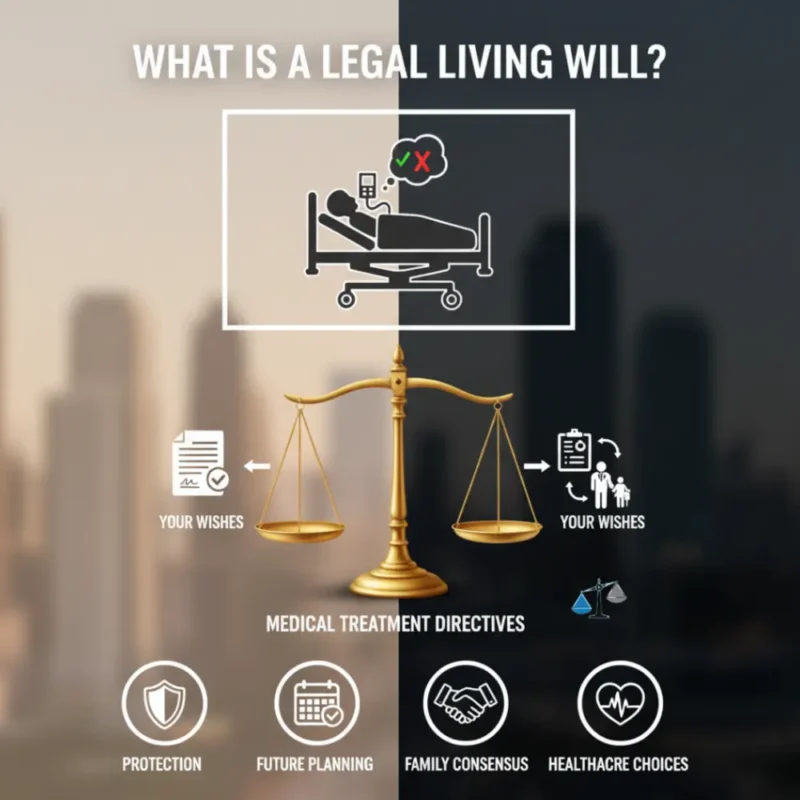
Simple definition of a legal living will: it is a written legal document that outlines a person’s medical treatment preferences in the event they become incapacitated and unable to communicate their wishes. In legal terms, a living will ensures healthcare providers and family members follow the individual’s decisions about life support, resuscitation, and other end-of-life care options.
Legal Basis
Living wills are governed by state statutes and healthcare laws. These laws specify how the document must be drafted, signed, and witnessed to be legally enforceable.
Courts uphold living wills as binding declarations of a person’s healthcare choices, provided the document meets statutory requirements. This legal foundation ensures patient autonomy, reduces family disputes, and guides medical professionals in critical situations.
Examples
Living wills are widely used to provide clarity in medical decision-making. Common examples include:
- Life-Sustaining Treatment
- A person may state whether they want to remain on mechanical ventilation if permanently unconscious.
- This prevents families from making uncertain or conflicting choices.
- Resuscitation Orders (DNR Instructions)
- Some individuals use a living will to decline cardiopulmonary resuscitation (CPR).
- Doctors then follow the directive without requiring family approval.
- Artificial Nutrition and Hydration
- The document may specify whether to continue tube feeding in terminal conditions.
- This avoids prolonged suffering or unwanted interventions.
- Pain Management Preferences
- Individuals can state a preference for palliative care and pain relief, even if it may shorten life expectancy.
- Organ Donation Directives
- Many living wills include instructions on organ or tissue donation after death.
Why a Legal Living Will Matters
A living will matters because it gives people control over their healthcare decisions even when they cannot speak for themselves. By documenting preferences in advance, individuals ensure their wishes are respected during emergencies or end-of-life care.
It also reduces emotional and legal conflicts among family members, who might otherwise disagree about treatment choices. For healthcare providers, a living will provides clear guidance, protecting both patient autonomy and medical staff from liability.
FAQ For Living Will
1. What is the main purpose of a living will?
The main purpose of a living will is to record an individual’s medical care preferences in situations where they cannot communicate. It ensures that doctors and family members follow the person’s wishes about treatments like life support or resuscitation. This promotes autonomy and prevents uncertainty.
2. Is a living will legally binding?
Yes, when properly drafted and executed under state law, a living will is legally binding. Medical professionals must respect the instructions, and family members cannot override them without a valid legal reason. Compliance with formalities such as signatures and witnesses is essential for enforceability.
3. How does a living will differ from a healthcare power of attorney?
A living will documents treatment preferences, while a healthcare power of attorney appoints a trusted person to make medical decisions on the patient’s behalf. Many people use both documents together to ensure complete coverage of their healthcare planning. This combination provides clarity and flexibility.
4. Can a living will be changed or revoked?
Yes, a living will can be amended or revoked at any time while the individual is still mentally competent. Changes must usually follow the same formal process as creating the original document, such as signing and witnessing. This flexibility ensures the document reflects current wishes.
5. Why should everyone consider having a living will?
Because medical emergencies are unpredictable, a living will provides peace of mind by making sure personal wishes are honored. It also prevents family disputes, reduces legal complications, and ensures smoother communication with healthcare providers. For these reasons, many estate planners recommend creating one.

Hamit Sahin is the founder and editor of LegalTerms.net. He researches U.S. legal terminology and publicly available legal information using statutes, court rules, judicial opinions, government publications, and established legal reference sources.
His work focuses on organizing complex legal concepts into clear, plain-English explanations for general educational purposes.
Hamit is not an attorney and LegalTerms.net does not provide legal advice.