Can You Sue Someone for Emotional Distress? When the Law Allows a Claim
Can You Sue Someone for Emotional Distress?
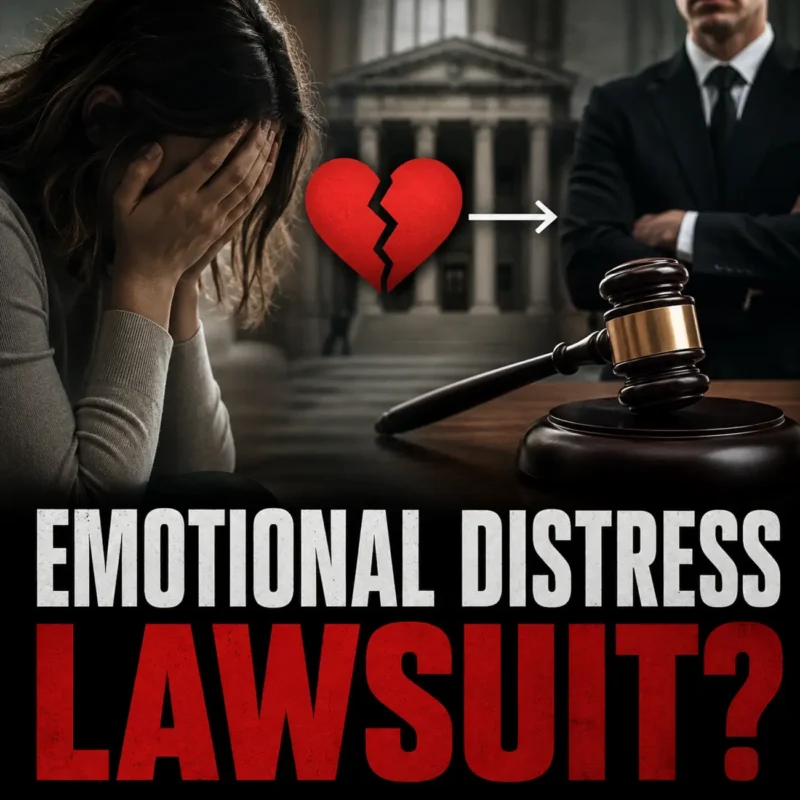
When someone humiliates, threatens, or traumatizes you, it is natural to ask whether the law can hold them responsible for the emotional fallout. In the United States you can sue over emotional harm, but the bar is higher than most people expect. Whether you actually have a case depends on what the other person did and why they did it.

Yes, you can, but emotional distress claims are recognized in narrow circumstances, and they almost always take one of two forms: intentional infliction of emotional distress or negligent infliction of emotional distress.
Both of those claims belong to tort law, the branch of civil law that lets one person recover money when another’s wrongful conduct causes them harm. Courts have accepted for decades that emotional injury is a real harm, not an imaginary one. Judges remain cautious all the same, because nearly every unpleasant encounter produces some stress, and the legal system cannot pay out for every hurt feeling.
That caution is why the law draws firm lines. A rude email, a public insult, or a broken promise rarely supports a lawsuit by itself, even when it genuinely wounds you. What separates a claim a court will hear from an ordinary bad experience is how extreme the conduct was, how serious the resulting harm is, and in many states, whether you can show more than your own word that the distress was real.
What Counts as Emotional Distress in a Legal Claim?
In a legal claim, emotional distress means serious mental suffering caused by another person’s conduct, not the everyday stress, irritation, or hurt feelings that ordinary life produces.
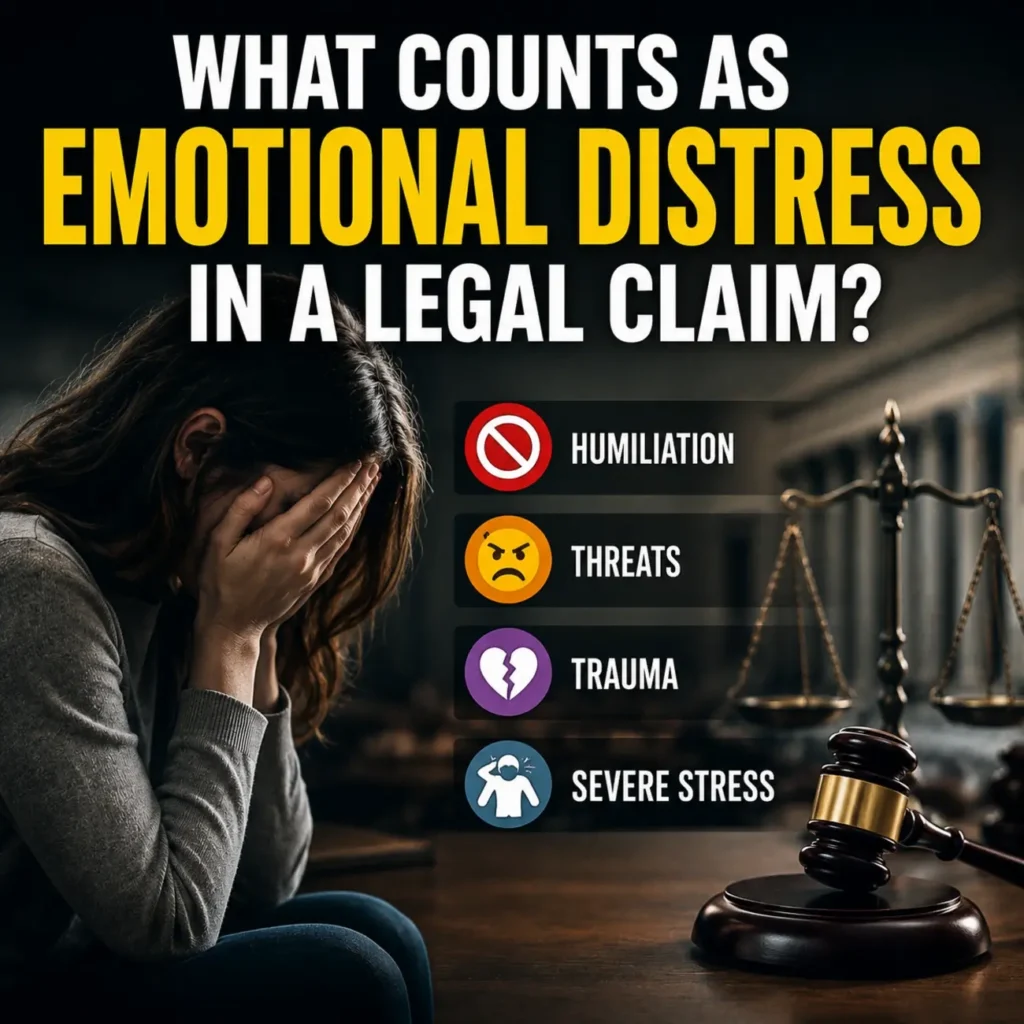
The distress has to be both real and significant. The Restatement of Torts, an influential treatise that summarizes common law principles, describes it as suffering so substantial that no reasonable person should be expected to endure it. Passing embarrassment or a rough week usually falls short.
In practice, qualifying distress tends to show up as a condition someone can describe or diagnose. Common examples include:
- Anxiety, panic attacks, or persistent fear
- Depression or prolonged, disabling grief
- Post-traumatic stress, flashbacks, or nightmares
- Sleep loss, withdrawal, or appetite changes
None of these guarantees a winning case. They matter because they give a court something concrete to weigh, which carries far more force than telling a judge you felt terrible.
The word doing the heavy lifting is severe. You can be deeply upset by an insult or a betrayal and still have no claim, because this remedy is reserved for harm that runs well past normal emotional ups and downs. Exactly how severe is severe enough is a question of degree, and it is one of the main reasons these cases are hard to win.
Is Emotional Distress Its Own Claim, or Part of a Bigger Case?
Before you think about suing, it helps to know that emotional distress can play two very different roles in a lawsuit, and the role it plays changes almost everything about your chances. Sometimes the distress is the entire case. Other times it rides along with a stronger claim as one of several harms you are asking to be paid for.
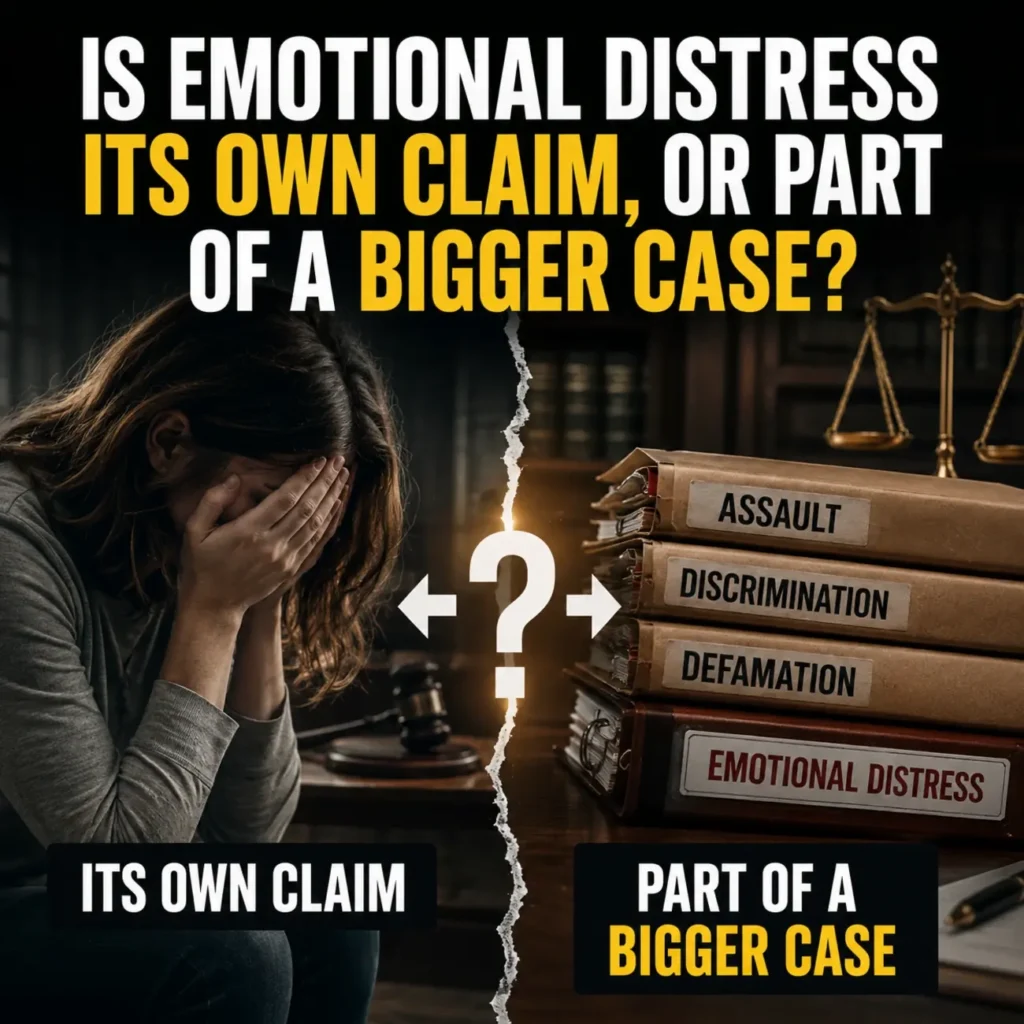
The first role is a standalone claim. Here, emotional harm is the injury itself, and the lawsuit succeeds or fails on whether that harm was caused the right way. The two standalone routes, intentional and negligent infliction, are the ones most people picture when they imagine suing for emotional distress. They are also the harder path.
The second role is far more common. Emotional distress frequently appears as a category of damages, often called pain and suffering, attached to a separate cause of action such as a car accident, an assault, or a wrongful arrest. In those cases the underlying wrong does the heavy lifting, and the emotional harm is one line on the bill, recovered alongside medical costs and lost wages.
Think of it like a passenger and a driver. As a damages component, your emotional distress is a passenger riding to the courthouse in a car driven by a stronger claim. As a standalone claim, it has to get there on its own, which is a much taller order. Knowing which seat you are in tells you a great deal about how realistic a lawsuit is.
What Must You Prove for Intentional Infliction of Emotional Distress?
To win an intentional infliction claim, you generally have to prove four things: that the conduct was extreme and outrageous, that the defendant intended to cause distress or recklessly ignored the risk of it, that the conduct actually caused your distress, and that the distress was severe.
| Element | What It Means |
|---|---|
| Extreme and outrageous conduct | Behavior so far beyond the bounds of decency that an average person would call it atrocious, not merely rude or offensive |
| Intent or recklessness | The defendant meant to cause severe distress, or acted in reckless disregard of the likelihood of causing it |
| Causation | The defendant’s conduct, rather than some unrelated event, is what produced the distress |
| Severe distress | Suffering serious enough that a reasonable person should not be expected to bear it |
The element that decides most cases is the first one. Ordinary insults, threats, and indignities almost never qualify as extreme and outrageous conduct. The Restatement of Torts is blunt about this: the law does not turn every petty oppression or hurtful remark into a lawsuit. Conduct has to reach the point where an average member of the community, hearing what happened, would react with outrage rather than mild disapproval.
Context can move the line. Courts are more willing to find outrageous conduct when someone abuses a position of power or preys on a known weakness, such as an employer who torments a worker, a debt collector who makes relentless threats, or someone who exploits a person they know to be grieving or ill. The same words can be tolerable in one setting and actionable in another.
There are also limits the Constitution imposes. In Hustler Magazine, Inc. v. Falwell, 485 U.S. 46 (1988), the minister Jerry Falwell sued over a crude parody ad that depicted him in a drunken encounter with his mother. A jury rejected his libel claim but awarded him damages for intentional infliction of emotional distress.
The U.S. Supreme Court reversed that award. It held that a public figure cannot recover for emotional distress over a parody no reasonable reader would take as stating real facts, even when the material is offensive and meant to wound, unless the figure can show a false statement of fact made with actual malice. The practical lesson reaches past celebrities: outrageousness by itself is not enough when speech on public matters is involved, and the law will sometimes shield deeply hurtful expression to protect that larger freedom.
All of this explains why intentional infliction claims are filed often but won rarely. The conduct has to genuinely shock, the intent has to be present, and the harm has to be real and serious. Come up short on any one of them, and the claim falls apart.
When Can Careless Conduct Support an Emotional Distress Claim?
Negligent infliction of emotional distress lets you sue when someone’s carelessness, rather than a deliberate act, causes you serious emotional harm, though most states allow it only under tightly defined conditions.
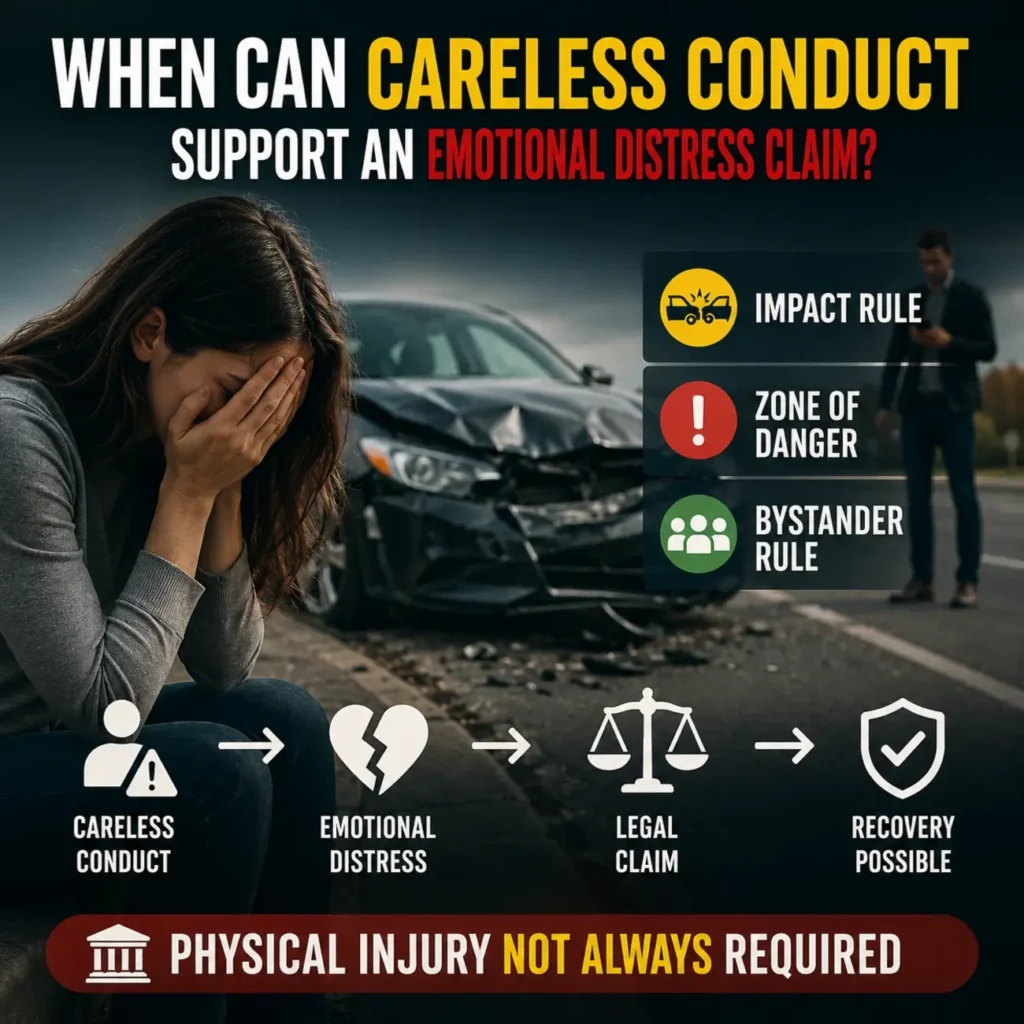
This claim is the careless cousin of intentional infliction. Instead of asking whether someone set out to hurt you, it asks whether their failure to use reasonable care, the heart of any negligence claim, foreseeably left you traumatized. Because almost any accident upsets someone, courts have built barriers to keep the door from swinging open too wide. States generally take one of three approaches:
- The impact rule, the oldest and strictest, requires some physical contact, however slight, before distress can be claimed.
- The zone of danger rule lets you recover if the carelessness put you in immediate physical danger and you feared for your own safety, in effect, if you stood close enough to be in the blast radius of the harm.
- The bystander rule allows recovery for witnessing serious harm to a close family member, but only within strict limits.
In many states you also cannot recover for negligent emotional distress without some physical injury or symptom to anchor the claim. The trend has loosened over the years, but the physical requirement has not vanished, and where you live matters a great deal.
The bystander route has its own landmark. In Dillon v. Legg, 68 Cal.2d 728 (1968), a mother watched a negligent driver strike and kill her young daughter in the street. Under the older zone of danger rule her claim would have failed, because she had not feared for her own safety. The California Supreme Court rejected that result as arbitrary and let her recover, reasoning that her emotional injury was a reasonably foreseeable consequence of the driver’s negligence. The decision opened bystander recovery across much of the country and made foreseeability, not physical proximity alone, the test.
That opening did not stay wide. Two decades later, in Thing v. La Chusa, 48 Cal.3d 644 (1989), a mother whose son was struck by a car was nearby but neither saw nor heard it happen; she learned of it moments later and rushed to find him injured. The same court that decided Dillon denied her claim and hardened the rule into three requirements: the plaintiff must be closely related to the victim, must be present and aware that the event is injuring the victim as it occurs, and must suffer distress beyond what an ordinary onlooker would feel. The contrast carries the whole lesson.
The Dillon mother saw the collision and could sue. The Thing mother arrived seconds later and could not. Witnessing only the aftermath, however devastating, is frequently not enough, which is exactly where the popular belief that any grieving family member can sue tends to break down.
How Do You Prove Emotional Distress in Court?
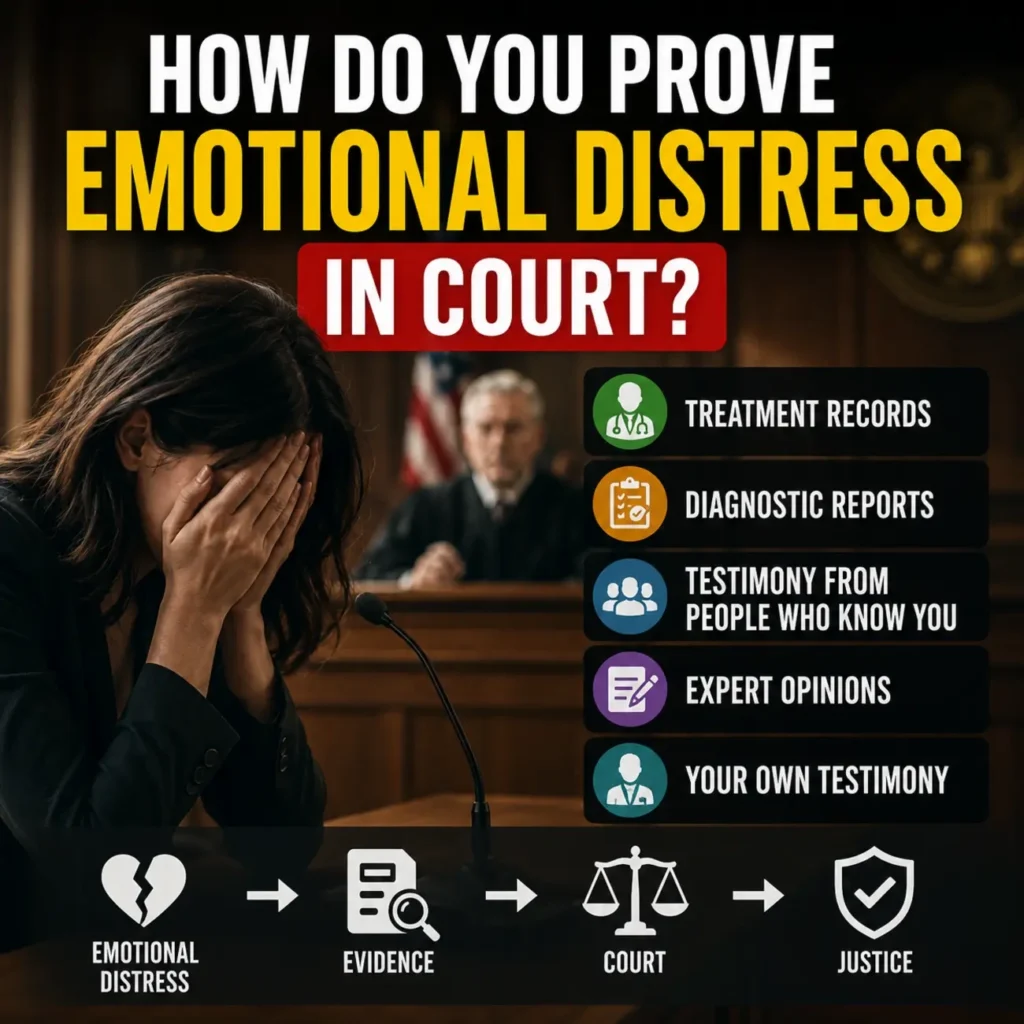
Proving emotional distress is harder than proving a broken arm, because there is no X-ray for anguish. To close that gap, courts look for corroboration, the outside evidence that turns private suffering into something a judge or jury can evaluate. The stronger that evidence, the stronger your case.
The proof that carries the most weight tends to include:
- Treatment records from a therapist, counselor, or physician, ideally predating the lawsuit
- A documented diagnosis such as depression or post-traumatic stress
- Testimony from you and from people who saw how the harm changed your daily life
- Expert testimony from a mental health professional in more serious cases
- Evidence of the conduct itself, such as messages, recordings, or witnesses, tying the distress to the defendant
Two practical truths run through all of this. Your own word, standing alone, is the weakest form of proof, which is why corroboration matters so much. And the value the law places on emotional harm is famously hard to predict, because no formula converts grief or fear into a dollar figure. Two people with similar experiences can recover very different amounts, which is one more reason these cases are difficult to handicap.
How to Tell If You Might Actually Have a Claim
You cannot decide your own case, but a realistic self-check before a paid consultation will tell you whether a lawsuit is worth exploring.
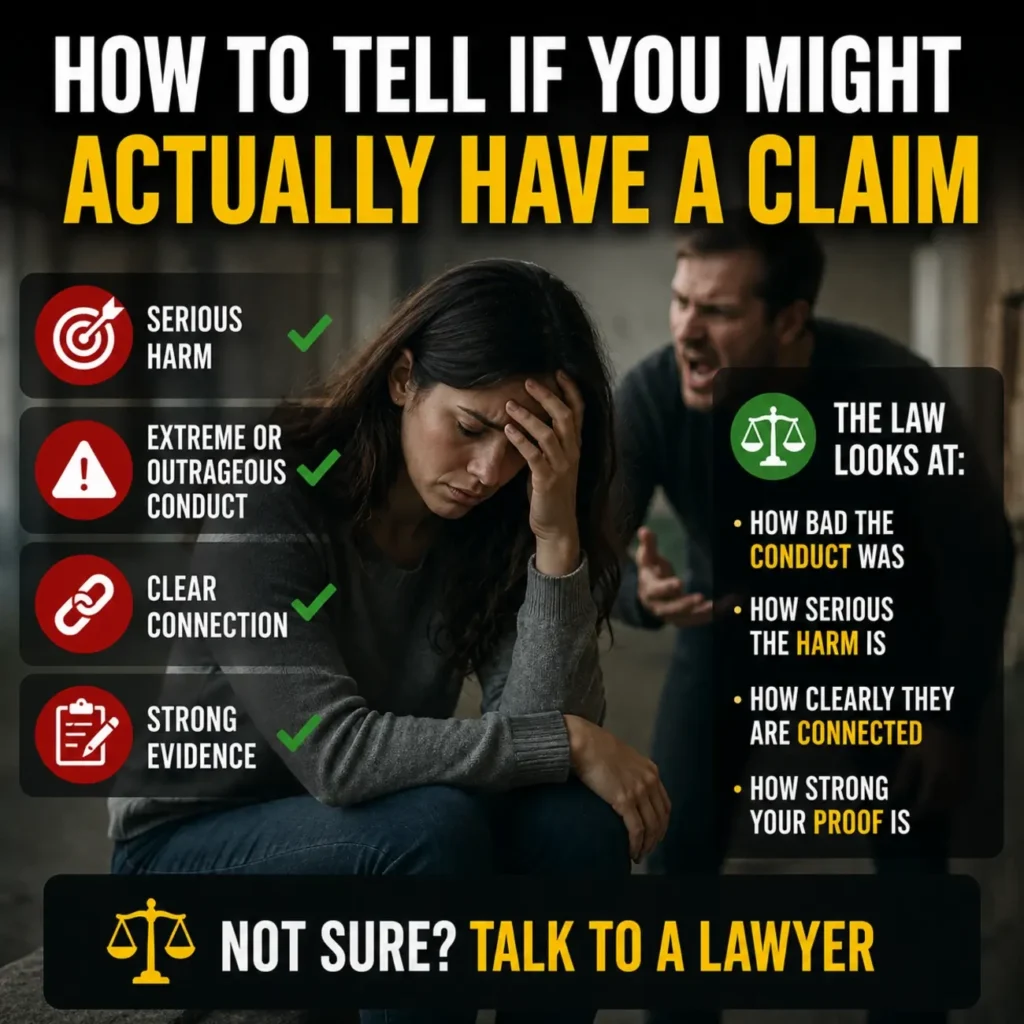
Start with which role your distress plays. If a separate wrong happened to you, such as an accident, an assault, or a wrongful arrest, your emotional harm likely travels with that claim, and the underlying injury is the real focus. If there is no other wrong and the distress itself is the case, you are on the harder standalone path, and the conduct will have to be genuinely extreme.
Then weigh the evidence and the setting. Useful questions to bring to a lawyer include:
- Was the conduct shocking by any reasonable measure, or merely rude or upsetting?
- Can I document the distress through treatment, a diagnosis, or witnesses, not just my word?
- Does my state require a physical injury or impact for this kind of claim?
- How much time do I have before the filing deadline runs out?
None of this replaces professional judgment. Emotional distress law turns heavily on local rules and specific facts, so the sensible next move is to sit down with a licensed attorney in your state who can assess your situation honestly.
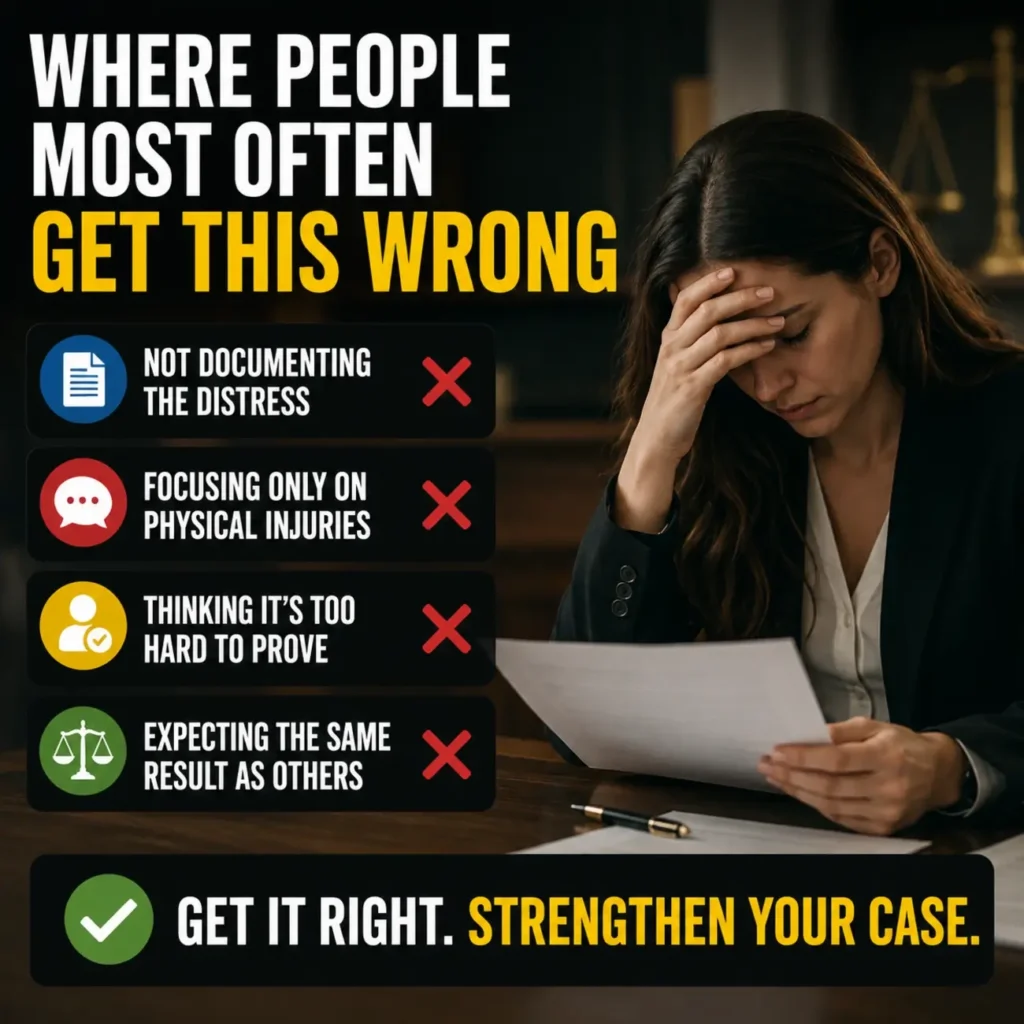
Where People Most Often Get This Wrong
A few mistaken beliefs steer people toward lawsuits with little chance, and spotting them early saves both heartache and legal fees.
The first is assuming that strong feelings equal a strong case. Being humiliated or deeply hurt is real, but the law compensates emotional distress only when the conduct or carelessness crosses a high line, and most unpleasant behavior falls below it.
The second is reaching for the wrong claim. When the harm flows from something a person said about you, the better fit is often a separate claim such as defamation, not infliction of emotional distress. The correct legal theory matters as much as the facts.
A third trap is expecting a predictable payout. No chart prices grief, fear, or humiliation, and a civil suit for distress is separate from any criminal case the same conduct might trigger. Assuming one guarantees the other leads to disappointment.
Frequently Asked Questions
Can you sue for emotional distress without any physical injury?
Sometimes, but it is an uphill climb. Intentional infliction claims do not require a physical injury, since the focus is on outrageous conduct. Negligence-based claims are stricter, and many states still demand a physical impact or symptom first. The answer turns on your state and the type of claim.
How do you prove emotional distress in court?
With corroboration, not just your own account. Treatment records, a documented diagnosis, testimony from people who saw the change in you, and sometimes an expert’s evaluation all show the distress was real and tied to the defendant. The more objective the evidence, the stronger the claim.
How much money can you recover for emotional distress?
There is no fixed figure. Awards swing widely with the severity of the harm, the strength of the evidence, the conduct, and state rules. Two people with similar stories can receive very different amounts, and some states cap certain damages, so these cases are hard to value in advance.
Can you sue someone for emotional distress caused by online harassment or text messages?
It is possible, but the same high bar applies. A sustained campaign of threats or harassment can reach extreme and outrageous conduct, while a few hostile messages usually will not. Save the messages, because the conduct itself becomes key evidence if you pursue a claim.
Is it hard to win an emotional distress lawsuit?
Yes. These are among the harder civil claims to win, because the conduct must be serious, the harm must be genuine and provable, and many states add a physical injury requirement. A standalone claim is tougher than emotional distress folded into a larger personal injury case.
How long do you have to file an emotional distress claim?
It depends on your state and the claim. Emotional distress is usually governed by the same deadlines as other personal injury actions, which often run from one to several years. Because missing the statute of limitations can end a valid case before it starts, confirm your state’s deadline early.
Can you sue a family member or an ex for emotional distress?
Yes, the law does not exempt relatives or former partners. The same elements apply: the conduct must be extreme or legally negligent, and the harm must be serious. Ordinary conflict, heartbreak, or a bad breakup will not support a claim, but genuinely abusive or outrageous behavior sometimes can.
References
- Cornell Law School Legal Information Institute: Intentional Infliction of Emotional Distress
- Cornell Law School Legal Information Institute: Negligent Infliction of Emotional Distress
- Justia: Hustler Magazine, Inc. v. Falwell, 485 U.S. 46 (1988)
- Justia: Dillon v. Legg, 68 Cal.2d 728 (1968)
- Justia: Thing v. La Chusa, 48 Cal.3d 644 (1989)
- Restatement (Second) of Torts § 46 (American Law Institute)
- LegalTerms.net Editorial Policy
- LegalTerms.net Sources and References
About This Article
This article was written by Hamit Sahin, Legal Researcher and Editor at LegalTerms.net, as a general explainer of when emotional distress can support a lawsuit in the United States. It walks through the two standalone claims, intentional and negligent infliction, the proof these cases demand, and how to recognize whether your own situation might qualify, reflecting the state of the law as of 2026. It deliberately leaves aside workers’ compensation and on-the-job psychological injury, detailed state-by-state statutes and damage caps, and step-by-step litigation strategy, each of which deserves its own treatment.
The explanation draws on primary and secondary legal sources, including the Restatement (Second) of Torts, the Cornell Law School Legal Information Institute, and the published opinions in Hustler Magazine, Inc. v. Falwell, Dillon v. Legg, and Thing v. La Chusa. The recognition guidance in the section on telling whether you have a claim is framed around the factors courts actually weigh, such as the severity of the conduct and the quality of the evidence, and is meant to help you assess your position before speaking with a professional, not as a substitute for advice from a lawyer who knows your case.
A note on what this is and is not. The content here is general legal information, not legal advice, and reading it does not create an attorney-client relationship. Emotional distress law varies considerably from state to state and turns on the specific facts of each case, so for guidance on your own circumstances you should consult a licensed attorney in your jurisdiction. This piece was produced independently by LegalTerms.net’s editorial team, without sponsorship and without input from any law firm or commercial party, so that its only aim is to inform.

Hamit Sahin is the founder and editor of LegalTerms.net. He researches U.S. legal terminology and publicly available legal information using statutes, court rules, judicial opinions, government publications, and established legal reference sources.
His work focuses on organizing complex legal concepts into clear, plain-English explanations for general educational purposes.
Hamit is not an attorney and LegalTerms.net does not provide legal advice.