Is It Legal to Film Police Officers Your Rights Explained
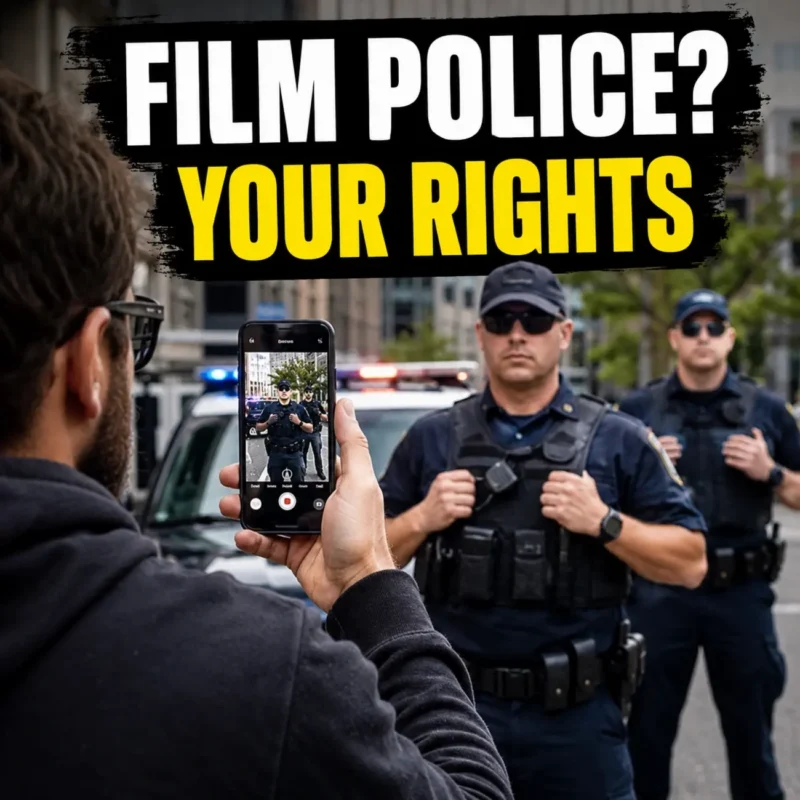
Do You Have a Legal Right to Film the Police?
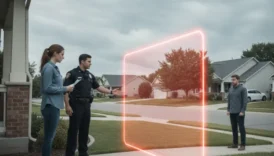
Pull out your phone at a traffic stop or an arrest, and the same tension shows up: are you allowed to record this, or could it get you in trouble? It is one of the most common questions people have about their rights in 2026, and the legal answer is clearer than most officers and bystanders assume.
Yes, in almost every situation you have a legal right to film police officers performing their duties in public. The First Amendment protects recording the police, and every federal appeals court that has ruled on the question agrees, though that right comes with real limits.
Key Points at a Glance:
- Short Answer: Generally yes, recording police performing their duties in public is protected
- Legal Basis: First Amendment, covering free speech, the press, and the right to gather information about government
- Where It Applies: Public places, or anywhere you have a legal right to be
- Audio Recording: Usually protected too, even in all-party consent states, when police act in public
- Main Limit: You cannot physically interfere with or obstruct officers
- Court Status: Every federal appeals court to rule has recognized the right; the Supreme Court has not ruled directly
- Key Case: Glik v. Cunniffe (2011)
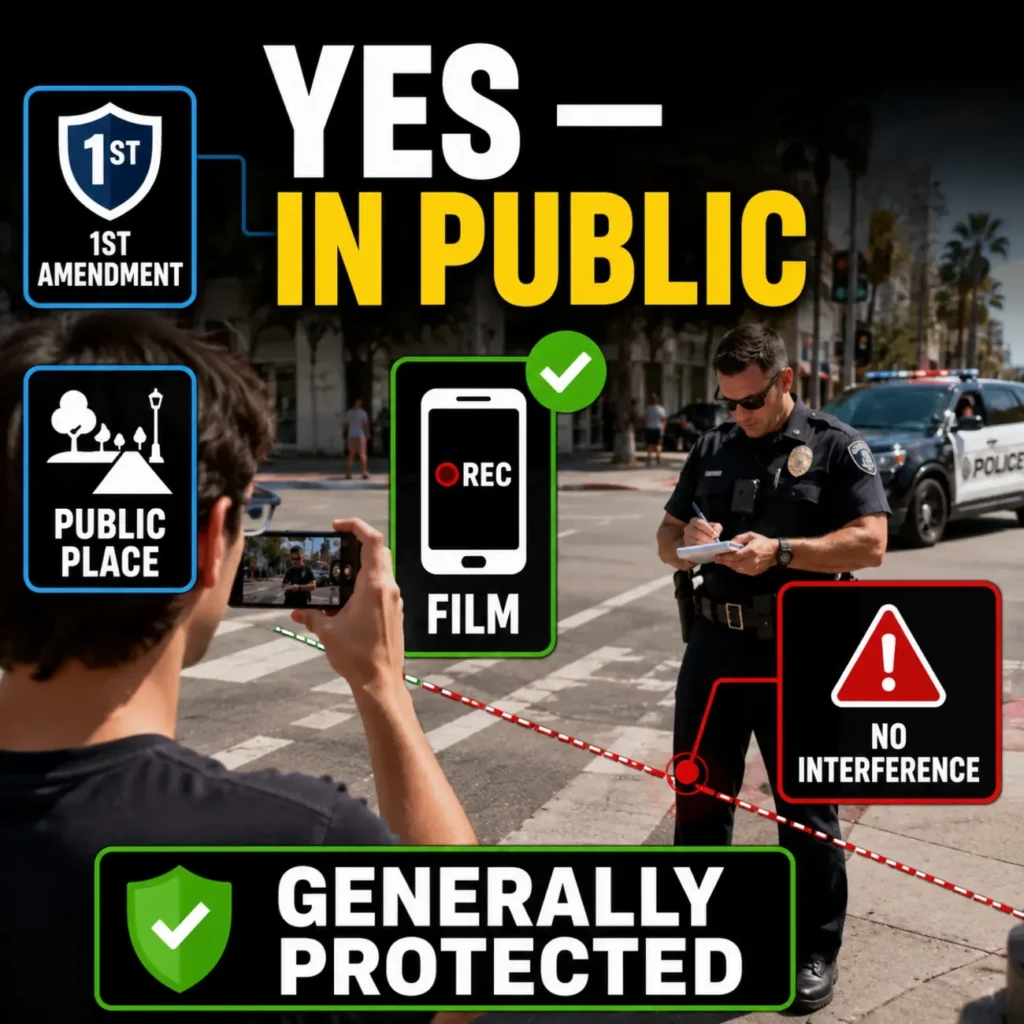
The right is well established across the country. Federal appeals courts covering different regions of the United States have each examined the question, and all of them have landed in the same place: filming officers as they carry out their public jobs is protected activity. Courts often describe the public’s role here as acting like a watchdog over the government.
There is one gap worth knowing about. The U.S. Supreme Court has never ruled directly on whether you can record the police, so no single nationwide decision settles every detail. In practice, that gap matters far less than it sounds. The agreement among the lower courts is so broad that, as of 2026, you can treat the right to film police in public as the established rule almost anywhere in the country.
Where people actually get into trouble is rarely the recording itself. It is how close they stand, whether they ignore an order to step back, or whether their behavior crosses from watching into interfering. You have a First Amendment right to film police officers performing their official duties in any public place where you are lawfully present. The rest of this article walks through where that right is strongest, where it ends, and how to use it without handing an officer a reason to arrest you.
What Does the First Amendment Actually Protect?
The First Amendment protects filming the police because it protects your right to gather and share information about how the government uses its power, not because some specific statute says “you may record officers.”
This distinction is the part most people miss, and it matters. The right to record grows out of free speech and freedom of the press, combined with the broader principle that the public is entitled to observe and document public officials doing their jobs in public. Because the protection is built on the act of gathering information, and not on who you are, it does not depend on having a press pass.
That has two practical consequences. First, an ordinary bystander recording the police has the same First Amendment protection as a credentialed journalist, because the right protects newsgathering itself, not a job title. Second, the same reasoning reaches beyond your local police department. Courts have applied it to other government officials carrying out their duties in public view, which can include federal agents and other law enforcement, not just a city patrol officer. The footage you capture is protected twice over: as information gathered about the government, and as a form of expression in its own right.
Where and When Can You Film the Police?
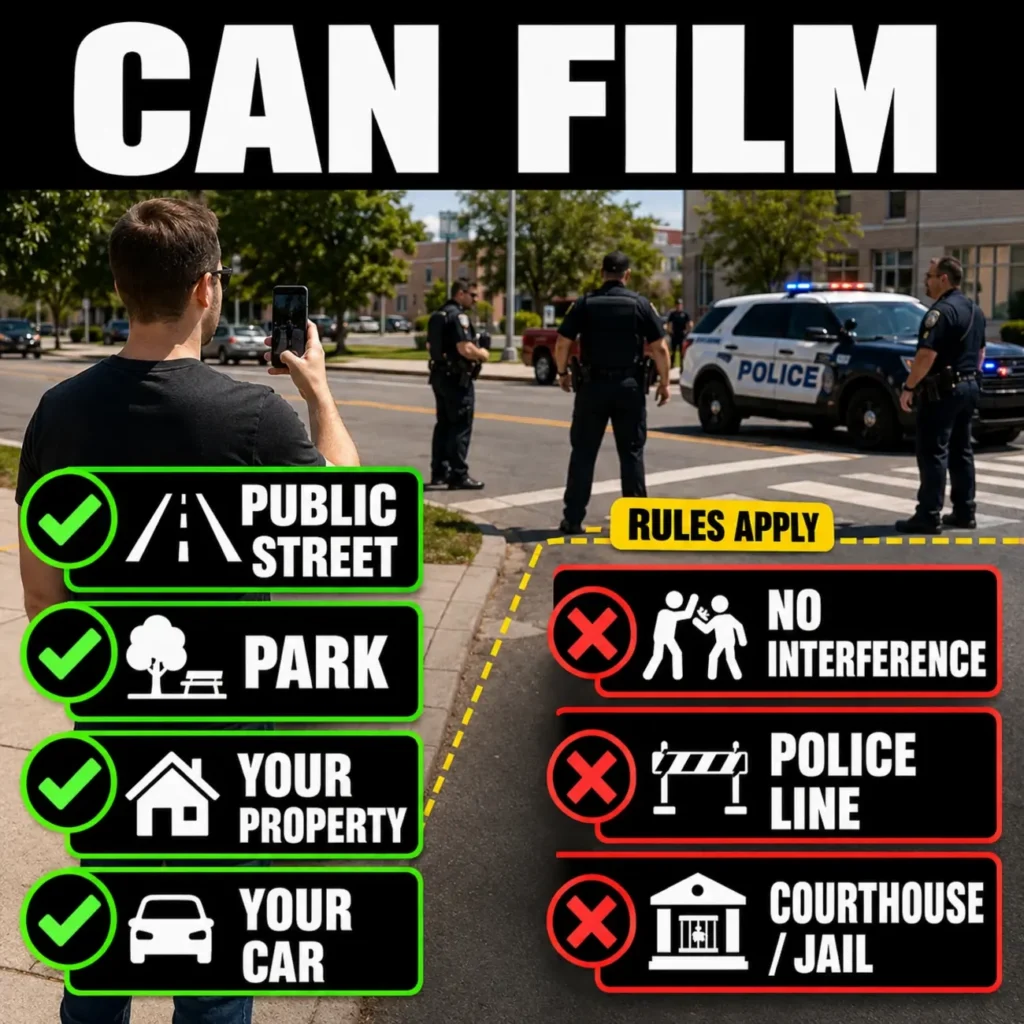
You can film the police anywhere you have a legal right to be, which includes public streets, sidewalks, parks, and your own property. The protection is strongest in clearly public spaces and thinner on private property or in places that carry their own access rules.
A useful way to think about it is to ask whether you are standing somewhere you are allowed to stand. If yes, and the officers are out in public doing their jobs, your recording is on solid ground. The clearest examples include:
- A public sidewalk, street, or park
- Your own home, yard, porch, or car
- A business open to the public, subject to the owner’s rules
- Any spot where members of the public are generally free to be
The government can still impose reasonable, content-neutral rules on time, place, and manner. Officers may set up a perimeter around an active scene, keep a lane clear for emergency vehicles, or ask everyone, cameras or not, to move to a particular spot. What they cannot do is single out recording for restriction. A rule that applies to everyone is very different from an order aimed at you specifically because you are filming. Inside places like courthouses, jails, or other government buildings, separate rules often apply, and recording may be limited or banned outright.
What Are the Limits on Filming the Police?
The main limit is simple: you can record, but you cannot interfere. Filming is protected, while physically obstructing officers, ignoring lawful orders, or pushing into a restricted area is not, and that conduct is usually what leads to an arrest.
Picture the difference between standing on the sidewalk watching firefighters work and walking into the burning building to get a better shot. One is observing. The other is getting in the way. The law draws a similar line with police: recording from a reasonable distance is protected, but crowding officers, refusing to step back when lawfully told to, or blocking their movement is not.
This is where many real disputes begin. Officers sometimes treat the camera itself as the problem and reach for a charge like obstruction, interference, or disorderly conduct when, in truth, the person was simply filming. That blurring is exactly why so many of these cases end up in court. Recording the police is protected by the First Amendment, while physically interfering with them is not, and the difference usually comes down to how close you were and whether you obeyed a lawful order. The safest position is also the strongest one legally: keep your distance, comply with content-neutral orders, and keep the camera running while you do.
Can You Record Audio of Police, or Only Video?
In most cases you can record audio as well as video. Even in states that normally require everyone’s permission to record a conversation, courts have held that officers doing their job in public have no reasonable expectation of privacy, so capturing their words is generally protected too.
This trips people up because of how recording laws are usually written. Some states follow what is often called all-party or two-party consent, meaning every person in a private conversation has to agree before it can be recorded. Those rules exist to protect genuinely private conversations, the kind where people reasonably expect not to be overheard. A police officer shouting orders during an arrest on a public street is not having that kind of conversation. On that reasoning, federal courts have rejected attempts to use eavesdropping and wiretapping laws to punish people for recording the audio of police in public.
The important limit is the word “public.” These rulings are about officers acting openly in public, not about secretly recording a private one-on-one conversation, which is a different question with different rules. If your situation involves a private conversation rather than police in public, see whether you can legally record a conversation without consent under your state’s law, because the answer there can be very different.
Do “Buffer Zone” Laws Make Filming Police Illegal in 2026?
Not so far. Several states have passed “buffer zone” laws that make it a crime to come within a set distance, usually 25 feet, of an officer after being told to step back, but as of 2026 these laws have mostly been blocked or struck down in court.
The trend started picking up after 2022, and the results have been rough for the states defending these laws:
| State | Law | Status as of 2026 |
|---|---|---|
| Arizona | 8-foot recording limit (2022) | Blocked by a federal court |
| Indiana | 25-foot (2023, amended 2025) | Held unconstitutional by the Seventh Circuit in 2025 |
| Louisiana | 25-foot (2024) | Enforcement preliminarily blocked; case ongoing |
| Florida | 25-foot (2024) | In effect, but facing First Amendment challenges |
| Tennessee | 25-foot | Passed and subject to challenge |
The recurring problem courts have flagged is vagueness. A rule that lets an officer create a 25-foot no-go zone simply by telling you to back up gives the police a way to push cameras away from almost anything, without a clear standard for when and why. Judges have struck these laws down on both First Amendment grounds, because they chill the gathering of news, and on due process grounds, because they fail to tell ordinary people what conduct is actually illegal.
Here is the practical takeaway. The legal picture is still moving, and a buffer law could be on the books, or temporarily in effect, in your state at any given moment. Do not assume one applies, and do not assume it does not. When an officer gives you a lawful order to step back, the smart move is to comply, create distance, and keep filming from where you are clearly allowed to stand.
Can Police Take Your Phone or Make You Delete a Recording?
No, the police generally cannot force you to delete a photo or video, and they cannot search your phone’s contents without a warrant. They may take physical possession of a device in limited situations, such as during an arrest, but getting inside it is a separate step that usually requires a judge’s approval.
The key authority here is the Supreme Court’s decision in Riley v. California (2014), which held that police need a warrant to search the data on a phone seized during an arrest. The phone in your pocket can hold your whole life, and the Court treated it that way. That means an officer cannot lawfully order you on the spot to unlock the device, hand over your footage, or delete what you recorded.
There is a difference between an officer holding your phone and an officer searching it. If you are arrested, police may take your phone along with your other belongings for safekeeping, and in some cases they may seize it as potential evidence. Even then, opening it up and going through your recordings generally requires a warrant. If an officer asks you to unlock your phone or delete a recording, you are usually within your rights to decline, since searching a phone normally requires a warrant. Deleting footage on command can also destroy your own best evidence, and nothing requires you to do it.
What Courts Have Said
The case that put the right to record on the map is Glik v. Cunniffe (2011). In October 2007, Simon Glik used his cell phone to openly record Boston police officers as they arrested a young man on Boston Common. The officers arrested Glik as well, charging him under the state’s wiretap law along with disturbing the peace. The charges were dismissed as baseless, and Glik sued.
The First Circuit ruled unanimously in his favor. It held that the right to film police carrying out their duties in a public place was “clearly established,” which meant the officers could not hide behind qualified immunity. Two parts of that decision still guide these cases today. The wiretap charge failed because Glik had recorded openly rather than secretly, and the court treated a bystander’s cell phone footage as newsgathering worthy of the same protection a journalist would receive. Put plainly, holding up your phone in public to document the police is not a crime. It is a protected act.
A year later, the Seventh Circuit pushed the point further on audio. In ACLU v. Alvarez (2012), it blocked Illinois from using its strict eavesdropping law to prosecute people who audio-record police performing their duties in public, reasoning that the recording was protected speech and the officers had no privacy interest to shield. More recently, courts have aimed the same skepticism at the new distance rules. In 2025, the Seventh Circuit upheld a ruling that Indiana’s 25-foot buffer law was unconstitutional, part of a steady pattern of these laws collapsing when challenged.
How to Film the Police Safely and Within the Law
Knowing you have the right is only half the picture. Using it without escalating the situation is the other half, and a little practical care goes a long way.
When you record police in public, a few habits keep you on the safe side of the line:
- Record openly from a reasonable distance rather than sneaking it
- Keep your hands visible and your phone clearly recognizable as a phone
- Stay calm and avoid stepping into the officers’ work area or blocking their movement
- If you are lawfully told to step back, comply, move, and keep filming from where you are allowed to stand
- Do not physically resist an order; create distance instead and object with your words if you disagree
- If you are stopped or detained, you can say you do not consent to a search of your phone, and you can ask whether you are free to leave
If officers stop or detain you while you are recording, it helps to know what your rights are during a police stop before things move quickly.
If you believe an officer crossed the line, by ordering you to stop filming, grabbing your phone, or arresting you for recording, write down what happened as soon as you can safely do so, and preserve the footage. These situations turn on their specific facts, and the law varies from one state and one federal circuit to the next, so consult a licensed attorney before deciding how to respond.
A Few Cautions
A few things are worth holding onto. The right to film police is strong, but it is not a magic shield, and an officer acting wrongly in the heat of the moment can still arrest you and leave the courts to sort it out afterward. The rules also shift by location, since state recording laws, local ordinances, and the newer buffer zone statutes can each affect what is legal where you are standing. Filming on private property, inside government buildings, or around federal facilities can follow entirely different rules. None of this is legal advice, and outcomes depend on the specific facts, so when something serious is at stake, check your state’s current law and speak with a licensed attorney.
Frequently Asked Questions
Can a police officer order you to stop filming?
Generally, no. An officer cannot lawfully order you to stop recording just because you are recording. They can give content-neutral orders that apply to everyone, such as telling a crowd to move back from an active scene, and those you do have to follow. The real test is whether the order targets your camera or instead applies to your conduct regardless of whether you are filming.
Can you be arrested just for filming the police?
It happens, even though courts have repeatedly said filming police in public is protected. An officer can still arrest you in the moment, often on a charge like obstruction or disorderly conduct. If the arrest was truly about the recording, it may violate your rights, which is exactly what a case like Glik v. Cunniffe was about. That is little comfort on the night it happens, so keeping your distance and complying with lawful orders remains your best protection.
Can police make you delete a video or photo?
No. Police cannot order you to delete footage, and they cannot search your phone without a warrant under the Supreme Court’s ruling in Riley v. California. Even if they lawfully take your phone during an arrest, getting into its contents is a separate step that normally requires a judge’s approval.
Do you have to tell police you are recording them?
In public, you usually do not. Because officers performing public duties have no reasonable expectation of privacy, the secret-recording rules in all-party consent states generally do not apply to them. Recording openly rather than secretly is still the smart move, since it removes any argument that you were eavesdropping, which is part of why the wiretap charge fell apart in the Glik case.
Is it legal to film police during a traffic stop?
Yes, if you are a bystander or a passenger recording from where you are lawfully present. If you are the driver being stopped, you can usually record too, but you still must comply with lawful orders, keep your hands visible, and avoid turning the recording into a reason for the encounter to escalate. Mounting the phone or setting it down beats reaching around suddenly.
Is it legal to film police on private property?
It depends on whose property it is and the rules that apply there. On your own property you are on firm ground. On someone else’s private property, the owner can set limits, and inside places like courthouses or jails, recording may be restricted or banned. The strong protection that applies in public spaces is at its weakest in these settings.
Is recording audio of police legal in two-party consent states?
Usually, yes. Even in states that normally require everyone’s consent to record a conversation, courts have held that officers doing their public job have no privacy interest in their on-duty words. So capturing the audio of police acting in public is generally protected, while secretly recording a private conversation between private individuals is a separate question with its own rules.
References
- Cornell Law School Legal Information Institute: First Amendment
- Justia: Glik v. Cunniffe, 655 F.3d 78 (1st Cir. 2011)
- Justia: Riley v. California, 573 U.S. 373 (2014)
- ACLU v. Alvarez (7th Cir. 2012) and Reporters Committee for Freedom of the Press v. Rokita (7th Cir. 2025), noted as sources in the text
- LegalTerms.net Editorial Guidelines
- LegalTerms.net Sources and References

Hamit Sahin is the founder and editor of LegalTerms.net. He researches U.S. legal terminology and publicly available legal information using statutes, court rules, judicial opinions, government publications, and established legal reference sources.
His work focuses on organizing complex legal concepts into clear, plain-English explanations for general educational purposes.
Hamit is not an attorney and LegalTerms.net does not provide legal advice.