Bail vs Bond: What’s the Legal Difference?
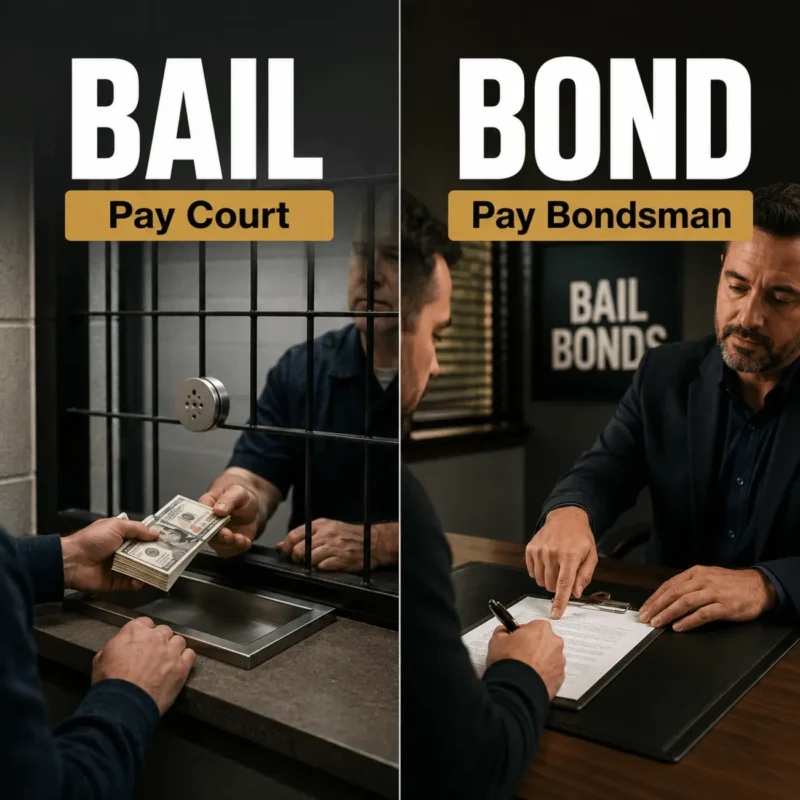
Bail vs Bond: Two Words People Mix Up
If you have ever watched a courtroom drama or read about an arrest in the news, you have probably heard bail and bond used as if they mean the same thing. They are closely related, and both can get someone out of jail before trial, but they are not identical. The real difference comes down to who puts up the money, whether you get it back, and what you are on the hook for if the defendant fails to appear. Knowing that distinction can save you real money and a few unpleasant surprises, so this article walks through what each term means, how they compare side by side, and where the line between them has started to blur.

What Bail Actually Means
Bail is the money or property you hand over to the court so a defendant can leave jail while the case is still going on. Think of it as a refundable security deposit on someone’s freedom. As long as the defendant shows up to every required court date, the court returns the money at the end, even if the person is later found guilty. If the defendant skips court, that money is gone and a warrant usually follows.
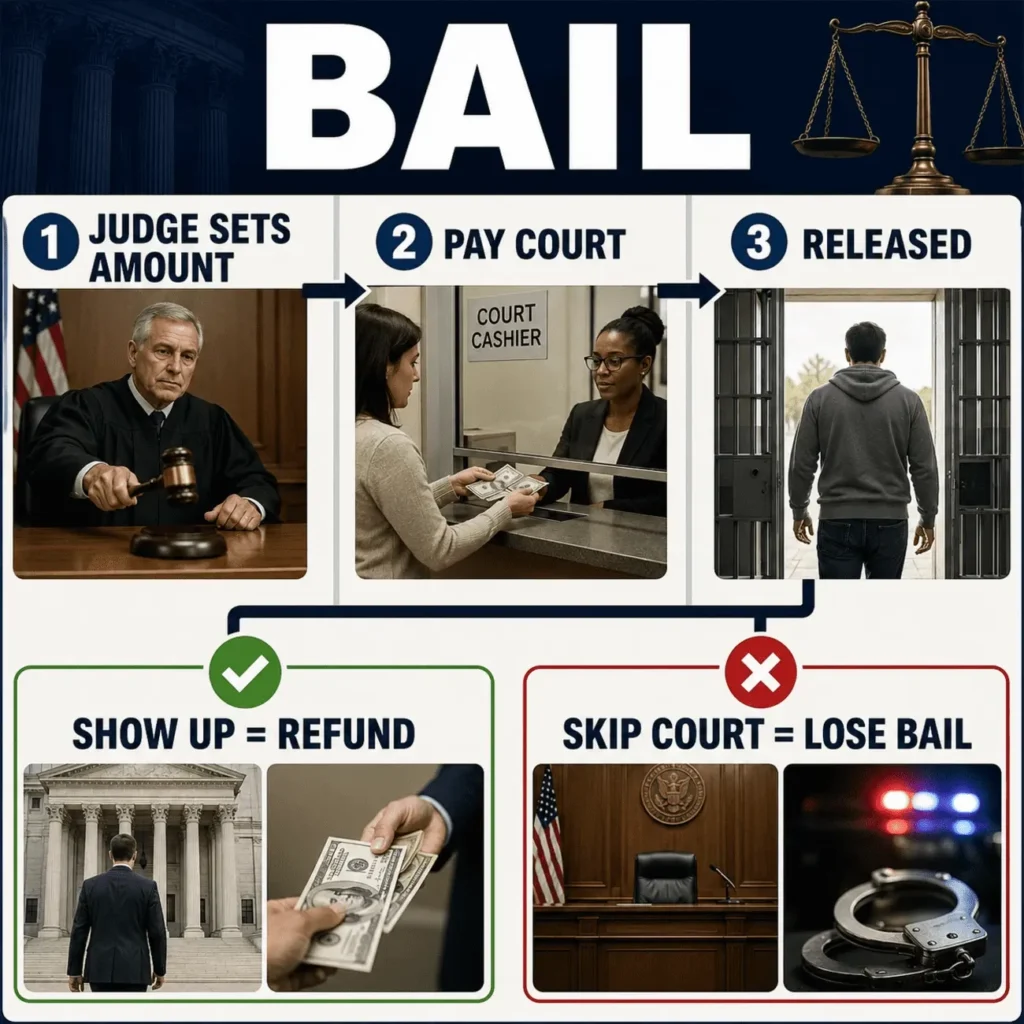
A judge decides whether to allow bail and how much it should be, and that decision is not random. The judge weighs things like how serious the charge is, whether the person has missed court before, their ties to the community, and how likely they are to flee. If you want a closer look at how a judge actually sets a bail amount, the figure rests on those risk factors rather than on punishment.
One point trips people up. Bail in its purest form means paying the full amount directly to the court yourself. Lawyers sometimes call this a cash bail or a cash bond, which is one reason bail and bond start to overlap. The key feature is that the money comes straight from you or your family, and it comes straight back if everyone follows the rules.
What a Bond Actually Means
A bond comes into the picture when the defendant cannot pay the full bail. Instead of you covering the whole sum, a third party steps in and promises the court the money. That third party is usually a bail bond company, and the promise itself is the bond. In exchange, the company charges a fee, commonly around 10 percent of the bail amount, and that fee is not refundable.
Picture a bond like asking a co-signer to back a loan you cannot get on your own. The co-signer guarantees the lender will be paid, but they keep a cut for taking on the risk. A bondsman does the same thing. They assure the court that the full bail will be covered if the defendant runs, and they keep their fee no matter how the case turns out.
Bond is really an umbrella term, because there is more than one way to secure a release. Here are the main types you are likely to run into:
| Type of Bond | How It Works |
|---|---|
| Surety bond | A bail bond company posts the bail for a non-refundable fee, usually about 10 percent, and often asks for collateral. |
| Cash bond | You pay the full bail amount directly to the court in cash, and it is returned if the defendant appears as required. |
| Property bond | You pledge real estate or another asset as collateral instead of cash, and the court can claim it if the defendant skips. |
| Personal recognizance (PR) | The defendant is released on a written promise to appear, with no money required up front. |
| Unsecured or signature bond | Nothing is paid to get out, but the defendant agrees to owe a set amount if they fail to show. |
Notice that some of these, like a cash bond, are really just bail paid in full, while others, like a surety bond, pull in an outside company and a fee you never get back. That overlap is exactly why the two words get tangled.
Bail vs Bond at a Glance
The fastest way to see the difference is to line the two up side by side. The table below compares them on the points that matter most to your wallet and your obligations.
| Feature | Bail | Bond |
|---|---|---|
| Who provides the money | You or your family, directly | A bail bond company, on the defendant’s behalf |
| Upfront cost | The full bail amount | Usually about 10 percent of the bail, as a fee |
| Refundable | Yes, returned if the defendant appears | No, the fee is kept either way |
| Third party involved | None | A licensed bail bondsman |
| Legal relationship | Directly between you and the court | A contract between you and the bond company |
| What you risk | Losing the full amount if the defendant flees | Owing the full bail plus any pledged collateral |
In short, bail is the price of freedom set by the court, and a bond is one way of paying that price when you cannot, or would rather not, cover the whole thing yourself.
How the Money Works: Fees, Refunds, and What You Lose
The money is where bail and bond really part ways. With cash bail, you front the entire amount, and the court holds it like a deposit. Show up to every hearing and the case closes, and you get the full sum back, minus any small administrative fee some courts charge. The money was never a payment for anything. It was leverage to make sure the defendant returned.
A bond flips that math. The fee you pay a bondsman, usually around 10 percent, is the price of a service, not a deposit. It is gone the moment you sign, whether the case ends in an acquittal, a conviction, or a dismissal. Think of it like booking a hotel room on someone else’s credit card for a fee. You avoid paying the full room rate up front, but the booking fee is theirs to keep, and you are still on the hook if the bill goes unpaid.
That last part is what people underestimate. If the defendant disappears, the bondsman owes the court the entire bail, and the bondsman will come after you and any collateral you pledged to recover it. A 10 percent fee can quietly turn into a fight over your car or your home.
What this means for you: a bond can look cheaper because the upfront number is smaller, but it is not free money and it never comes back, while cash bail ties up more money now yet can return in full later. Which path makes sense depends on how much cash you can reach, how much you trust the defendant to appear, and the rules in your state. Because those rules and the contracts involved vary widely, it is worth having a licensed attorney review any bond agreement before you sign it.
A Real Case: Stack v. Boyle (1951)
Bail is not whatever number a judge feels like naming. The Constitution puts a ceiling on it. The Eighth Amendment says excessive bail shall not be required, and the Supreme Court spelled out what that means in Stack v. Boyle, 342 U.S. 1 (1951).
The case came out of the Cold War. Twelve people were arrested for conspiring to violate the Smith Act, a law aimed at advocating the overthrow of the government. A federal district court set bail at a flat 50,000 dollars for each of them, without weighing their individual circumstances. The defendants argued the amount was excessive and asked to have it reduced.
The Supreme Court agreed that bail had not been set the right way. It held that the only legitimate purpose of bail is to make sure the defendant comes back for trial, not to punish or to keep someone locked up before any verdict. Setting bail higher than the amount reasonably needed to guarantee that return is excessive under the Eighth Amendment. Just as important, the Court said bail has to be decided case by case, based on the individual defendant, rather than stamped uniformly across a group.
Stack v. Boyle still anchors how courts think about bail today. It is the reason a judge is supposed to weigh your specific situation instead of attaching a one-size-fits-all price tag to a charge. The ruling is about bail itself, but it shapes the bond world too, since the bail figure the court sets is the very number a bondsman agrees to cover.
Where the Lines Blur: Cash Bonds and Bail Reform
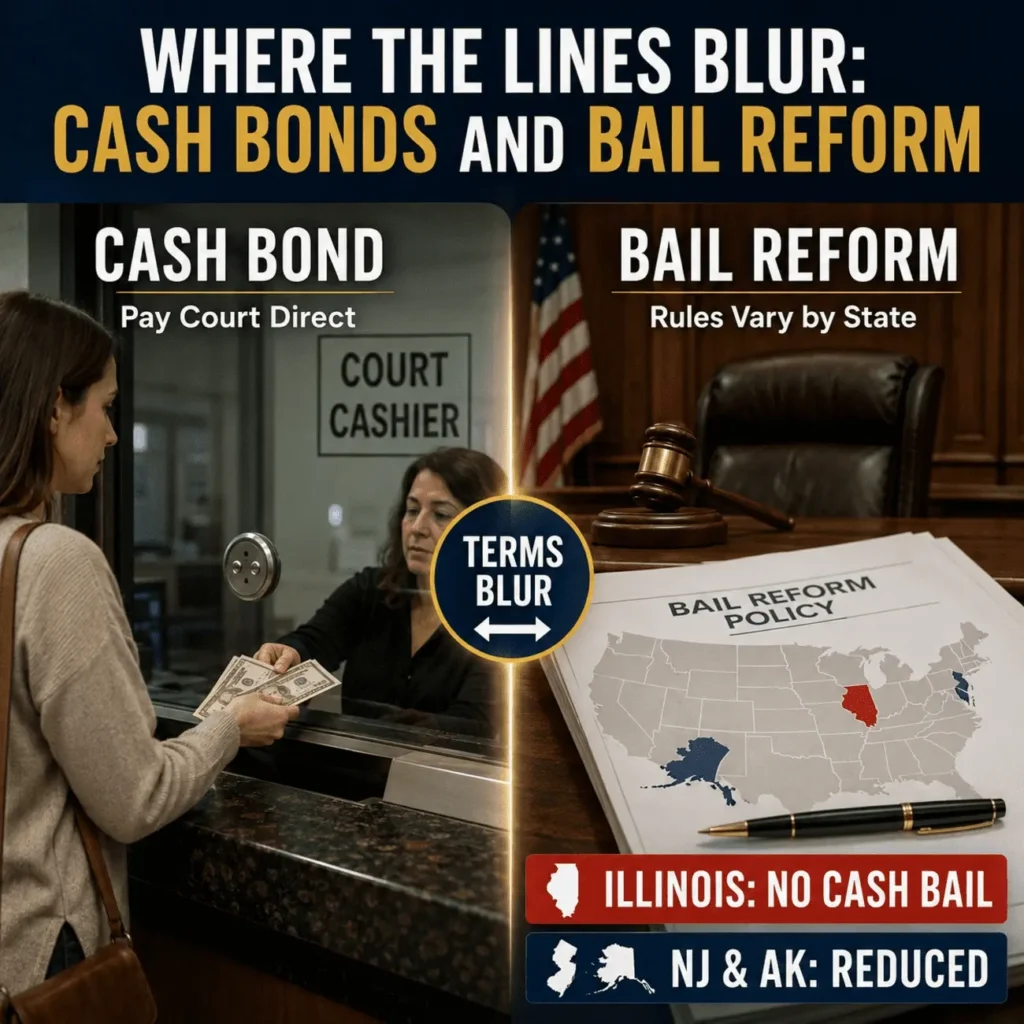
If the terms still feel slippery, that is partly because the system itself keeps shifting. The phrase cash bond is a good example. It describes paying the full bail amount in cash directly to the court, which is really just bail by another name. Courts and clerks use bail and bond almost interchangeably in everyday paperwork, so do not be surprised when the words swap places depending on who you are talking to.
The bigger change is the bail reform movement. Critics argue that money bail keeps poorer defendants locked up simply because they cannot afford to pay, while wealthier people accused of the same crime walk free. In response, several states have reworked their pretrial systems. As of 2026, Illinois remains the only state to have fully eliminated cash bail, through the Pretrial Fairness Act, which took effect in September 2023 and replaced money bail with risk-based release decisions. Other states, including New Jersey and Alaska, have sharply reduced their reliance on it.
This is an active and contested area of law. Some reforms have been expanded, others scaled back or challenged in court, and the rules can look very different from one state to the next. What this means for you is easy to state and harder to act on: the bail-or-bond question you face in one state may not even exist in another, so the only reliable place to confirm how it works is your own jurisdiction, ideally with a licensed local attorney.
What This Means in Practice
For most people, the practical takeaway is about money and risk rather than vocabulary. If you can afford the full amount and trust the defendant to appear, cash bail keeps the money in the family and gives it all back later. If you cannot, a surety bond lowers the upfront cost but turns a refundable deposit into a fee you will never see again, along with a contract you are personally responsible for.
If you are researching a situation rather than facing one, a useful habit is to separate three layers: the bail amount the court sets, the method used to satisfy it, and who carries the financial risk. Keeping those straight makes news stories and court documents far easier to read, because reporters and even some clerks blur them constantly.
None of this replaces advice built around a real case. The numbers, the eligibility rules, and the consequences of a missed court date all turn on the specific charge and the specific state, so a licensed attorney is the right person to explain how the rules apply to an actual set of facts.
A Few Cautions
A few things are worth keeping in mind. Bail and bond rules are set state by state, and sometimes county by county, so a fee structure or release option that is standard in one place may not exist in another. The 10 percent figure for bondsman fees is a common reference point, not a fixed rule, and some states regulate or cap it differently. Collateral requirements, refund timelines, and the list of offenses eligible for release vary as well.
It also helps to remember that release is not the end of anything. Bail and bond only address whether someone waits for trial at home or in custody. They say nothing about guilt, innocence, or the eventual outcome of the case.
Finally, this article is general educational information and does not constitute legal advice. Laws change, jurisdictions differ, and only a licensed attorney who knows the facts of a particular case can advise on what to do. If a real arrest or bond agreement is involved, speak with one before making decisions.
Frequently Asked Questions
Is a bond the same thing as bail?
Not quite, though they are closely linked. Bail is the amount the court sets to release a defendant before trial, while a bond is one method of satisfying that amount, usually through a bail bond company that posts the money for a fee. People use the words interchangeably because they point at the same goal, getting out of jail, but the source of the money and the financial consequences are different.
Do you get your money back with a bond?
Generally no. The fee you pay a bail bondsman, often around 10 percent of the bail, is a charge for their service and is not refundable, even if the defendant attends every hearing and the case is later dismissed. Cash bail works differently, because that full amount is returned once the defendant meets all required court dates.
What happens if you cannot afford either one?
If a defendant cannot post cash bail or arrange a bond, they may remain in custody until the case is resolved, which is one of the main criticisms driving bail reform. In some situations a judge may release a person on personal recognizance, meaning a written promise to appear with no money required up front. Whether that option is available depends on the charge, the person’s record, and the rules in that jurisdiction.
What is the difference between a cash bond and a surety bond?
A cash bond means you pay the full bail amount directly to the court yourself, and it is returned if the defendant appears as required. A surety bond means a bail bond company posts the amount for you in exchange for a non-refundable fee and often some collateral. The cash bond costs more up front but comes back, while the surety bond costs less up front but is gone for good.
Does every state still use cash bail?
No. While most states still rely on some form of money bail, the system is changing. As of 2026, Illinois is the only state to have fully eliminated cash bail, and others have reduced their use of it, so the exact rules depend heavily on where the case is being heard.
References and Sources
- Cornell Legal Information Institute entry on bail
- Eighth Amendment of the U.S. Constitution, Cornell LII
- 18 U.S.C. Section 3142, release or detention of a defendant pending trial, Cornell LII
- Black’s Law Dictionary, definitions of “bail” and “bond,” Bryan A. Garner, ed., 11th ed. (2019), print edition
- Stack v. Boyle, 342 U.S. 1 (1951), full opinion via Justia U.S. Supreme Court Center
- LegalTerms.net editorial guidelines
- the research sources we rely on
- our copyright policy

Hamit Sahin is the founder and editor of LegalTerms.net. He researches U.S. legal terminology and publicly available legal information using statutes, court rules, judicial opinions, government publications, and established legal reference sources.
His work focuses on organizing complex legal concepts into clear, plain-English explanations for general educational purposes.
Hamit is not an attorney and LegalTerms.net does not provide legal advice.