What Is Legal Liability in Contract Law?
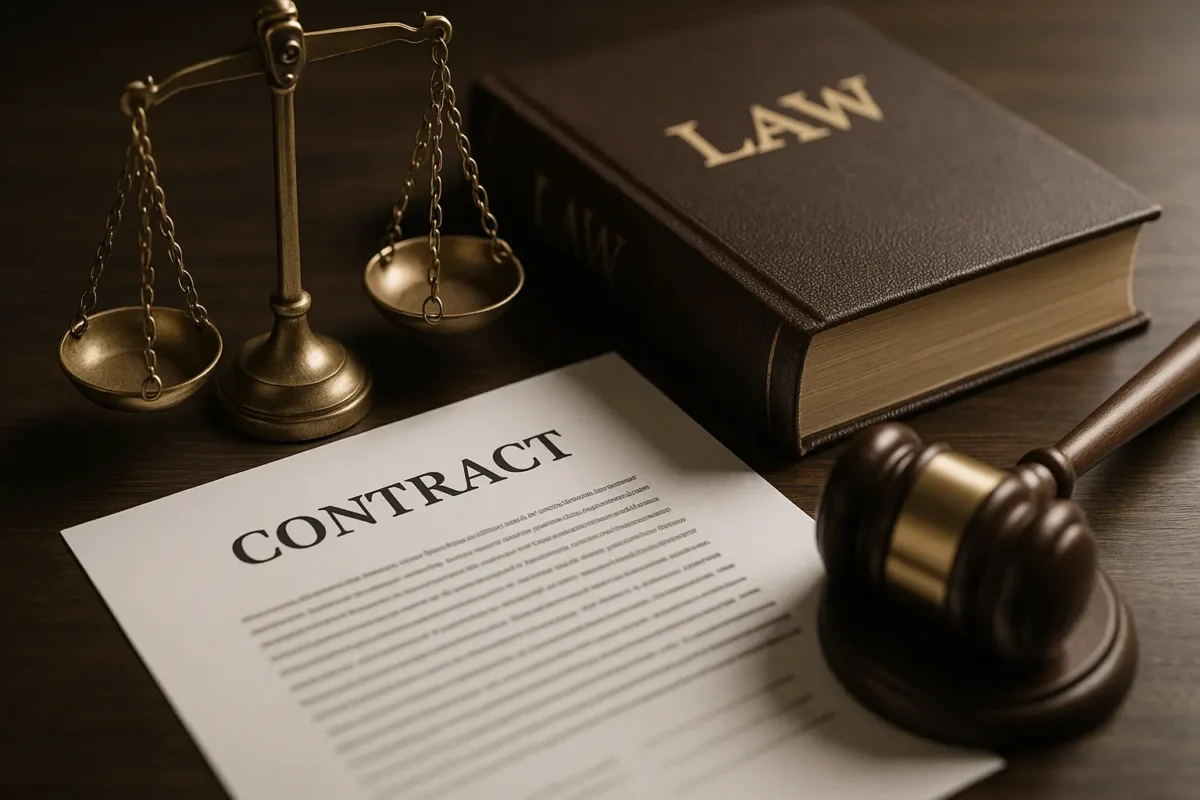
Legal liability in contract law refers to the responsibility one party has when they fail to honor the promises made in a legally binding agreement. Contracts are the backbone of business, employment, and everyday transactions. Understanding liability helps both individuals and companies know what happens if they breach a contract or fail to perform their obligations.
Simple Definition
Legal liability in contract law means that when one party breaches (breaks) the terms of a contract, they can be held responsible by the other party. This responsibility often involves paying damages, performing the agreed duty, or facing other legal remedies ordered by a court.
Real-Life Examples
- Business contracts: A supplier fails to deliver goods on time, causing a store to lose money. The supplier may be liable for those losses.
- Employment contracts: An employee breaks a non-compete clause, and the employer sues for damages.
- Service agreements: A contractor leaves a job unfinished, and the homeowner seeks compensation.
- Lease agreements: A tenant fails to pay rent, making them liable for unpaid amounts.
Importance of the Term
- Accountability: Ensures both parties take their obligations seriously.
- Predictability: Clarifies what happens if one side fails to perform.
- Fairness: Provides remedies like damages or specific performance to restore balance.
- Trust in business: Encourages individuals and companies to enter agreements with confidence.
Comparison (Contract Liability vs. Tort Liability)
| Factor | Contract Liability | Tort Liability |
|---|---|---|
| Origin | Arises from a contract agreement | Arises from wrongful acts outside contracts |
| Breach | Failure to perform contract terms | Negligence, fraud, or intentional harm |
| Remedy | Damages, performance, rescission | Compensation for harm or injury |
FAQ
1) What makes a contract legally binding?
A valid contract usually requires an offer, acceptance, consideration (value exchanged), and mutual intent to be bound.
2) What happens if I breach a contract?
You may be held liable to pay damages, perform your duty, or face penalties depending on the terms and laws.
3) Can liability in contracts be limited?
Yes. Many contracts include limitation of liability clauses, but courts may reject them if they’re unfair.
4) Is breaking a contract always illegal?
Not always. Breach of contract is a civil matter, not a crime, but it carries financial and legal consequences.
5) Can both parties be liable in the same contract?
Yes. If both sides fail to meet obligations, each can claim liability against the other.
Closing
Legal liability in contract law ensures that promises made in binding agreements are enforceable. It gives parties confidence to do business, knowing that if one side fails to perform, remedies exist to protect the other.

Hamit Sahin is the founder and editor of LegalTerms.net. He researches U.S. legal terminology and publicly available legal information using statutes, court rules, judicial opinions, government publications, and established legal reference sources.
His work focuses on organizing complex legal concepts into clear, plain-English explanations for general educational purposes.
Hamit is not an attorney and LegalTerms.net does not provide legal advice.