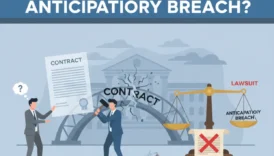
What Is an Ex Parte Order?

In certain urgent situations, courts may issue orders without notifying or hearing the other party. These orders, called ex parte orders, are designed to provide immediate relief where waiting for the usual process could result in harm or injustice. They are temporary in nature and must later be reviewed with input from all parties.
Simple Definition
An ex parte order is a court order issued at the request of one party, without requiring prior notice or participation of the other party involved in the case.
Real-Life Examples
- Domestic violence: A temporary restraining order is granted to protect a victim before the abuser is notified.
- Child custody: An emergency custody order is issued when a child is in immediate danger.
- Business disputes: A court freezes assets to prevent them from being hidden or moved.
- Injunctions: A temporary order prevents construction that may cause irreparable harm to property.
Importance of the Term
- Provides immediate protection: Especially in cases involving safety or risk of harm.
- Prevents injustice: Stops parties from exploiting delays in the legal process.
- Balances urgency and fairness: Designed to be temporary until a full hearing can occur.
- Supports efficiency: Allows courts to act quickly in emergencies.
Ex Parte vs. Regular Court Orders
| Factor | Ex Parte Order | Regular Court Order |
|---|---|---|
| Notice requirement | No prior notice to the other party | Both parties are notified |
| Duration | Temporary, until a full hearing is held | May be long-term or final |
| Purpose | Urgent protection or prevention of harm | Resolving disputes after hearing both sides |
| Fairness safeguard | Reviewed later with all parties present | Parties participate from the start |
FAQ
1) Are ex parte orders permanent?
No. They are temporary and followed by a full hearing.
2) Who can request an ex parte order?
Typically, individuals facing urgent harm, such as domestic violence victims, or parties seeking emergency relief in civil cases.
3) Can ex parte orders be challenged?
Yes. Once issued, the other party has the right to appear and contest the order in court.
4) Do ex parte orders violate due process?
Not if they are temporary and followed by a hearing where both sides can be heard.
5) How quickly can an ex parte order be issued?
Often within hours or the same day, depending on the urgency of the situation.
Closing
An ex parte order is a powerful but temporary legal remedy that allows courts to act swiftly in urgent cases. While it initially proceeds without both sides present, it is always subject to later review, balancing the need for immediate relief with the principles of fairness and due process.

Hamit Sahin is the founder and editor of LegalTerms.net. He researches U.S. legal terminology and publicly available legal information using statutes, court rules, judicial opinions, government publications, and established legal reference sources.
His work focuses on organizing complex legal concepts into clear, plain-English explanations for general educational purposes.
Hamit is not an attorney and LegalTerms.net does not provide legal advice.