What Is Legal Guardianship and How Is It Obtained?

Legal guardianship is often described as a legal relationship in which one person is given authority to make decisions for another. While technically correct, this definition misses the most important dimension: guardianship is not just about authority—it is about controlled transfer of autonomy under judicial oversight.
At its core, legal guardianship exists to protect individuals who are unable to make informed decisions for themselves. However, modern legal systems increasingly treat it as a last resort, not a default solution.
What Does Legal Guardianship Really Involve?
Most explanations simplify guardianship as “taking care of someone.” In reality, it is far more complex and, in some cases, controversial.
Guardianship can include the authority to:
- Make financial decisions (banking, property, investments)
- Determine living arrangements (including institutional care)
- Approve or refuse medical treatments
- Manage legal rights and obligations
But here’s the overlooked truth:
Guardianship is not about giving power — it is about legally limiting someone else’s power to protect them.
Types of Guardianship (Beyond Basic Definitions)
| Type | Description | Hidden Complexity |
|---|---|---|
| Full Guardianship | Complete decision-making authority | Often criticized for overreach |
| Limited Guardianship | Authority restricted to specific areas | Requires precise court definitions |
| Temporary Guardianship | Short-term emergency authority | Frequently used in medical crises |
| Guardianship of a Minor | Applies to children | Can conflict with parental rights |
The Critical Distinction Most People Miss
Many confuse guardianship with voluntary legal arrangements. For example:
- A guardian ad litem represents someone’s best interests in court, but does not control their life
- A power of attorney is granted willingly by a competent person
- Guardianship, however, is imposed by a court after determining incapacity
This distinction matters because guardianship involves removal or restriction of fundamental rights.
Who Typically Requires Legal Guardianship?
While the concept seems straightforward, the reasons behind guardianship cases vary widely.
Common Scenarios
- Elderly individuals with dementia or cognitive decline
- Adults with developmental disabilities
- Children without capable parents
- Individuals with severe mental illness
- Patients in long-term unconscious or impaired states
A Less Discussed Reality
Not every vulnerable person should be placed under guardianship.
In fact, courts increasingly ask:
- Can the person make some decisions independently?
- Are there less restrictive alternatives available?
- Is guardianship being requested for convenience rather than necessity?
This shift is especially visible in cases involving:
- family law guardianship disputes
- Situations involving step-parent roles, such as step parent guardianship arrangements
- Transitional cases where care responsibility changes over time
Subtle but Important Risk
Guardianship can sometimes be misused.
For example:
- Family members may seek control over finances
- Disputes may arise between relatives about who should be appointed
- In rare cases, guardianship becomes a tool for exploitation
This is why courts require strong evidence before approving it.
The Legal Threshold: When Does Guardianship Become Necessary?
Courts do not grant guardianship lightly. There must be clear proof that the individual meets specific legal standards for incapacity, which are generally defined within formal court procedures and jurisdictional guidelines.
- Cannot understand relevant information
- Cannot evaluate consequences
- Cannot communicate decisions effectively
And most importantly:
The inability must be persistent, not temporary or situational.
What Most Articles Fail to Explain
One of the biggest misconceptions is that guardianship is permanent.
In reality:
- It can be modified
- It can be challenged
- It can be terminated
This becomes especially relevant in situations like:
- Recovery from illness
- Rehabilitation progress
- Cases involving terminating guardianship of a minor
Hidden Complexity in Modern Legal Systems
Legal guardianship today is evolving. Courts are moving toward:
- Supported decision-making models
- Partial autonomy frameworks
- Periodic judicial reviews
This means guardianship is no longer a “set and forget” legal status—it is actively monitored.
How Is Legal Guardianship Obtained? (Step-by-Step Breakdown Most Sources Skip)
Legal guardianship is not a simple application you submit and wait for approval. It is a multi-layered legal process designed specifically to prevent misuse. Courts assume that removing someone’s decision-making rights is serious — and they treat it that way.
Most guides explain the process in 3–4 steps. In reality, there are hidden layers, delays, and strategic pitfalls that can determine whether your case succeeds or fails.
Step 1: Filing the Petition — More Than Just Paperwork
The process begins with filing a formal petition in court. This document must include:
- Detailed information about the person needing guardianship
- The reasons why guardianship is necessary
- Evidence of incapacity (medical or psychological)
- Proposed guardian’s qualifications
But here’s what many people miss:
The court is not just evaluating the person in need — it is also evaluating YOU.
Even small details matter:
- Financial stability of the petitioner
- Relationship to the individual
- Past conflicts within the family
This is why many applicants seek guidance from an attorney for legal guardianship, especially in contested cases.
Step 2: Medical and Psychological Evaluation
After filing, the court usually requires an independent evaluation.
This is one of the most critical stages.
What the Evaluation Actually Determines
- Cognitive ability
- Decision-making capacity
- Awareness of consequences
- Risk of harm if left independent
However, there is a nuance most articles ignore:
- A person can fail in one area but still retain rights in another
This is how limited guardianship cases are formed.
Hidden Risk
If the evaluation is not thorough or is challenged by another party, the case can:
- Be delayed significantly
- Require multiple expert opinions
- Turn into a contested hearing
Step 3: Court Investigation and Background Checks
Before any hearing, courts often assign:
- A court investigator
- A social worker
- A guardian ad litem (in some jurisdictions)
Their job is to independently verify:
- Living conditions
- Family dynamics
- Potential conflicts of interest
What They Look For (Rarely Explained Clearly)
- Is someone benefiting financially from guardianship?
- Are there disputes between relatives?
- Is guardianship being used to bypass another legal process?
This stage becomes especially sensitive in cases involving:
- transferring guardianship of a minor
- Blended families and step-parent roles
Step 4: Court Hearing — Where Most Cases Are Won or Lost
The hearing is not just a formality. It is where everything is tested.
What Happens During the Hearing
- The judge reviews all evidence
- Medical experts may testify
- Family members can object
- The individual may speak if capable
Critical Insight
Judges are not looking for perfection — they are looking for necessity.
Even if someone struggles, the court may deny guardianship if:
- Less restrictive alternatives exist
- The person can function with support
- The request seems excessive
Step 5: Court Decision and Scope of Authority
If approved, the court issues an order defining:
- What decisions the guardian can make
- What rights remain with the individual
- Reporting requirements
This is where many misunderstandings happen.
Guardianship Is Not “Unlimited Power”
A guardian may:
- Control finances but not medical decisions
- Decide housing but not personal relationships
Everything depends on the court order.
Step 6: Ongoing Responsibilities (The Part Nobody Talks About)
Getting guardianship is only the beginning.
After appointment, the guardian must:
- Submit regular financial reports
- Provide status updates to the court
- Act strictly in the best interest of the individual
Failure to comply can result in:
- Removal as guardian
- Legal penalties
- Reassignment of guardianship
Real-World Complexity
In practice, guardianship cases rarely remain static.
Situations evolve:
- Health conditions improve or worsen
- Family conflicts arise later
- New legal claims appear
This leads to modifications, and sometimes even:
- terminating guardianship of a minor
- Replacing an existing guardian
Cost Reality (Rarely Explained Transparently)
The cost of guardianship varies widely depending on complexity.
Typical Cost Structure
| Expense Type | Estimated Range |
|---|---|
| Court Filing Fees | $100 – $500 |
| Medical Evaluations | $300 – $2,000 |
| Attorney Fees | $1,500 – $10,000+ |
| Ongoing Reporting Costs | Varies annually |
Important Insight
Low-conflict cases are relatively affordable.
But when disputes arise:
- Costs escalate quickly
- Proceedings take months (or years)
- Emotional strain becomes significant
The Strategic Mistake Most Applicants Make
The most common mistake is assuming:
“If someone needs help, guardianship is the solution.”
Courts don’t think that way anymore.
They first consider:
- Supported decision-making
- Financial supervision alternatives
- Limited authority arrangements
Guardianship is only granted when all other options fail.
A Final Thought for This Section
Legal guardianship is not just a legal process — it is a structured intervention into someone’s autonomy.
Understanding the procedure is not enough.
What truly matters is understanding:
- When it should be used
- When it should NOT be used
- And how easily it can become contested
Legal Guardianship vs Alternatives: What Most People Get Wrong
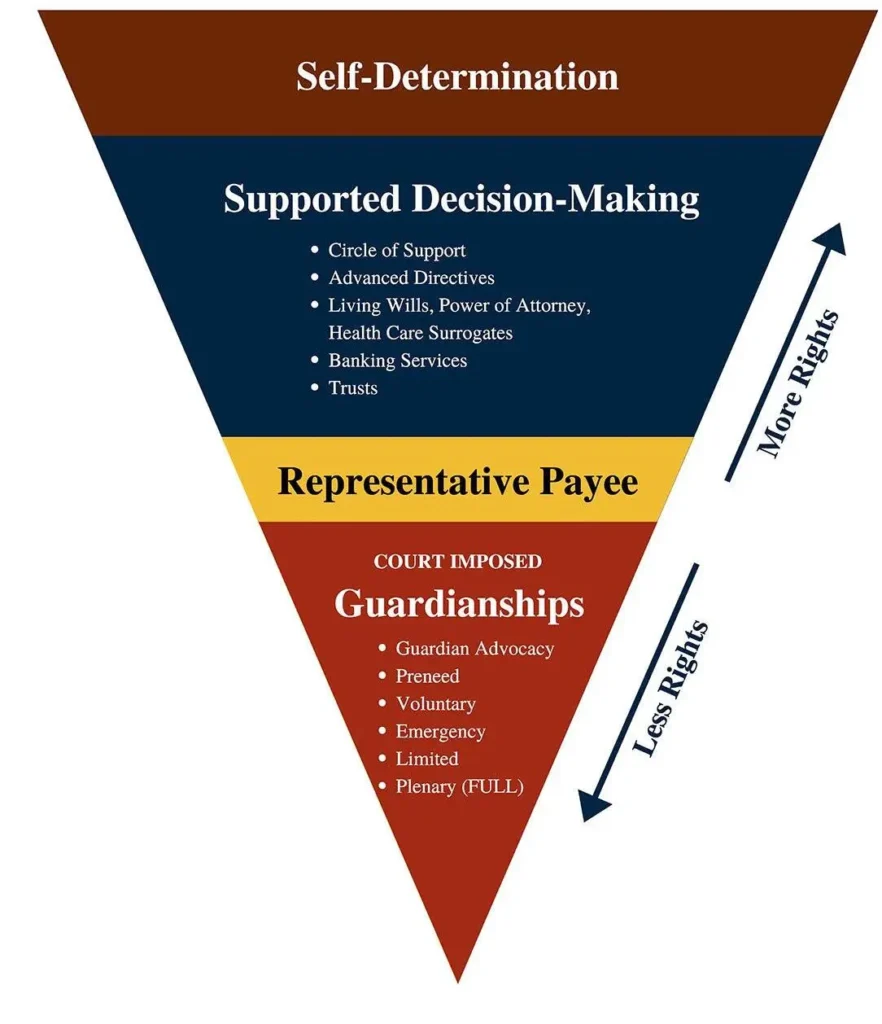
One of the biggest misconceptions about legal guardianship is that it is the “default solution” when someone needs help. In reality, modern legal systems treat guardianship as the last option, not the first.
This shift has created a silent but important evolution: courts now actively look for alternatives before granting guardianship.
Why Courts Prefer Alternatives Over Guardianship
Guardianship directly affects a person’s fundamental rights. Because of this, judges often ask:
- Can this person function with assistance instead of control?
- Is full authority truly necessary?
- Would a less restrictive arrangement achieve the same protection?
The Core Principle
The law is moving from “substitution of decision-making” to “support of decision-making.”
This single shift explains why many guardianship petitions are denied or limited.
Key Alternatives to Legal Guardianship
Below are the most commonly used alternatives — and the nuances most articles ignore.
1. Power of Attorney (POA)
A power of attorney allows someone to act on behalf of another person.
Critical Differences from Guardianship:
- Granted voluntarily
- Can be revoked at any time
- Does not require court approval
Where It Fails
POA becomes ineffective when:
- The individual loses mental capacity
- There is no prior arrangement
- Family members dispute its validity
2. Supported Decision-Making (SDM)
This is one of the fastest-growing alternatives.
Instead of replacing decision-making, it:
- Provides advisors or supporters
- Allows the individual to remain in control
- Encourages independence
Why It Matters
Supported decision-making is often used in cases where:
- Full guardianship would be excessive
- The individual can still participate in decisions
- Courts want to preserve autonomy
3. Trusts and Financial Management Tools
In financial matters, guardianship is often avoidable.
Common Tools
- Revocable trusts
- Representative payees
- Joint accounts with safeguards
Overlooked Advantage
These tools:
- Avoid court involvement
- Reduce legal costs
- Prevent long-term reporting obligations
Comparison Table: Guardianship vs Alternatives
| Feature | Guardianship | Power of Attorney | Supported Decision-Making |
|---|---|---|---|
| Court Required | Yes | No | No |
| Control Level | High | Moderate | Low |
| Flexibility | Limited | High | Very High |
| Cost | High | Low | Minimal |
| Rights Impact | Significant | Minimal | Minimal |
The “Grey Area” Most People Don’t Understand
There is a wide grey zone where guardianship could be applied — but shouldn’t be.
Examples include:
- Elderly individuals with mild cognitive decline
- Young adults with partial disabilities
- Family disputes disguised as “care concerns”
Hidden Risk in Family Law Contexts
Guardianship is sometimes used strategically in disputes, especially in:
- family law guardianship cases
- Conflicts involving inheritance or control
- Situations where one party seeks legal advantage
Step-Parent and Blended Family Complexity
One of the least discussed areas is guardianship involving step-parents.
Cases involving step parent legal guardianship often include:
- Biological parent objections
- Jurisdictional conflicts
- Emotional vs legal authority clashes
What Courts Actually Evaluate
- Existing parental rights
- Stability of the household
- Long-term best interests of the child
This makes such cases far more complex than typical guardianship petitions.
Transferring and Modifying Guardianship
Guardianship is not permanent, and this is a major point many overlook.
Situations That Lead to Change
- Relocation of the guardian
- Change in the ward’s condition
- Conflict of interest emerging later
This is where cases like:
- transferring guardianship of a minor
become legally necessary.
Important Insight
Courts prefer continuity — but not at the expense of the individual’s welfare.
When Guardianship Becomes a Problem
Guardianship is designed for protection, but it can create unintended consequences.
Common Issues
- Loss of personal freedom
- Financial misuse risks
- Lack of oversight in some jurisdictions
- Emotional and psychological impact
The Hard Truth Most Articles Avoid
Guardianship can sometimes do more harm than good.
Especially when:
- It is applied too broadly
- It is not reviewed regularly
- It is used in high-conflict family environments
The System’s Weak Spots (Rarely Discussed)
Even though courts are careful, the system is not perfect.
Known Challenges
- Limited monitoring resources
- Overburdened court systems
- Inconsistent standards between jurisdictions
Why This Matters
Because once guardianship is granted:
- It can be difficult to reverse
- It may take years to challenge
- The individual’s voice may become limited
A More Realistic Perspective
Legal guardianship should not be seen as a “solution,” but as a legal intervention with trade-offs.
The real question is not:
“Can guardianship be obtained?”
But rather:
“Is guardianship truly the least harmful option?”
Final Perspective: When Legal Guardianship Is Truly Necessary
Legal guardianship is often approached as a protective legal tool — and it is. But what makes it complex is that it protects by limiting something fundamental: personal autonomy.
Most people focus on how to obtain guardianship. Far fewer ask whether it should be obtained at all.
The Real Decision Behind Guardianship
When courts evaluate a guardianship case, they are not just deciding:
- Who should take responsibility
- What authority should be granted
They are deciding something deeper:
How much independence a person is allowed to keep.
This is why modern courts are increasingly cautious. The legal system is slowly shifting toward preserving autonomy whenever possible, even if that means accepting a certain level of risk.
When Guardianship Becomes the Right Choice
Despite all alternatives, there are situations where guardianship is not just appropriate — it is necessary.
Clear Indicators
- The individual is unable to understand basic decisions
- There is a consistent risk of harm
- No reliable support system exists
- Financial or medical exploitation is likely
In these cases, guardianship provides:
- Structure
- Legal protection
- Accountability
When Guardianship Should Be Avoided
Equally important are the situations where guardianship is not the right solution.
Warning Signs
- The request is driven by family conflict
- The individual can function with limited assistance
- Financial control is the primary motivation
- Less restrictive alternatives exist
A Critical but Overlooked Balance
There is always a tension between:
- Protection (preventing harm)
- Freedom (preserving independence)
Guardianship sits exactly in the middle of this tension.
Too much control leads to loss of dignity.
Too little control can lead to harm.
The Long-Term Reality
Many assume guardianship is a one-time legal action. In reality, it creates an ongoing relationship with legal consequences.
Over time:
- Circumstances change
- People recover or decline
- Relationships evolve
Which is why cases involving:
- terminating guardianship of a minor
- Modifying authority levels
- Reassigning guardians
are more common than most people think.
The Most Important Takeaway
Legal guardianship is not about control.
It is about responsibility — under legal scrutiny.
And perhaps the most important question is not:
“How do I get guardianship?”
But:
“Am I prepared for everything that comes with it?”
Frequently Asked Questions About Legal Guardianship
Can legal guardianship be reversed once granted?
Yes, legal guardianship can be reversed, but only through a court process. The individual must demonstrate regained capacity or that guardianship is no longer necessary. Courts typically require updated medical evidence and may reassess the entire situation before making a decision.
Does guardianship give complete control over a person’s life?
Not always. In many cases, courts grant limited guardianship, meaning the guardian only has authority over specific areas such as finances or medical decisions. Full control is less common and usually reserved for severe incapacity cases.
How long does it take to obtain legal guardianship?
The process can take anywhere from a few weeks to several months. Uncontested cases move faster, while disputes, additional evaluations, or court backlogs can significantly extend the timeline.
Can family members disagree on who becomes the guardian?
Yes, and this is more common than many expect. When disputes arise, the court evaluates all parties and prioritizes the best interest of the individual rather than family preference.
Is hiring an attorney necessary for guardianship cases?
Not always, but in complex or contested situations, working with an attorney for legal guardianship significantly increases the chances of success and reduces procedural mistakes.

Hamit Sahin is the founder and editor of LegalTerms.net. He researches U.S. legal terminology and publicly available legal information using statutes, court rules, judicial opinions, government publications, and established legal reference sources.
His work focuses on organizing complex legal concepts into clear, plain-English explanations for general educational purposes.
Hamit is not an attorney and LegalTerms.net does not provide legal advice.