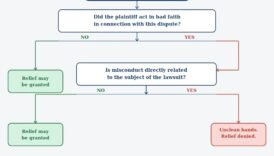
What Is Civil Contempt of Court?

Civil contempt of court is a legal mechanism used by judges to enforce compliance with court orders. Unlike criminal contempt, which punishes disobedience to the authority of the court, civil contempt is primarily aimed at compelling someone to obey a court ruling, such as paying child support or following an injunction.
Simple Definition
Civil contempt of court occurs when a person fails to comply with a court order, and the court takes action to enforce obedience. The goal is not to punish but to compel the person to fulfill their obligations. Civil contempt usually ends once the person complies with the order.
Real-Life Examples
- Child support: A parent refuses to pay court-ordered child support and may be held in civil contempt until payments are made.
- Injunctions: A company continues illegal activities despite a court injunction, leading to civil contempt penalties.
- Divorce orders: One spouse refuses to hand over property or assets as ordered by the court.
- Discovery process: A party refuses to provide documents during discovery in a civil lawsuit.
Importance of the Term
- Ensures compliance: Enforces court orders to maintain fairness and justice.
- Protects rights: Ensures that parties who win judgments actually receive the benefits ordered by the court.
- Restores balance: Compels wrongdoers to fulfill obligations without necessarily imposing criminal penalties.
- Judicial authority: Strengthens the court’s ability to enforce its own decisions.
Comparison (Civil vs. Criminal Contempt of Court)
| Factor | Civil Contempt | Criminal Contempt |
|---|---|---|
| Purpose | To compel compliance | To punish disobedience |
| Duration | Ends when the person complies | Fixed penalty or sentence |
| Focus | Enforcing rights of the other party | Protecting the court’s authority |
FAQ
1) How does civil contempt differ from criminal contempt?
Civil contempt seeks compliance with court orders, while criminal contempt punishes defiance.
2) What penalties can be imposed in civil contempt?
Fines, daily penalties, or even jail until the person complies.
3) Can someone avoid civil contempt by claiming inability to comply?
Yes, if the court finds genuine inability rather than willful refusal.
4) Is civil contempt permanent?
No. It typically lasts only until compliance with the court order is achieved.
5) Who decides civil contempt cases?
The same judge overseeing the original case usually determines contempt issues.
Closing
Civil contempt of court is an essential tool for enforcing compliance with judicial orders. It ensures that judgments and rulings are not ignored and that the rights of parties are protected without necessarily resorting to criminal punishment.

Hamit Sahin is the founder and editor of LegalTerms.net. He researches U.S. legal terminology and publicly available legal information using statutes, court rules, judicial opinions, government publications, and established legal reference sources.
His work focuses on organizing complex legal concepts into clear, plain-English explanations for general educational purposes.
Hamit is not an attorney and LegalTerms.net does not provide legal advice.