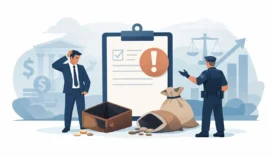
What Is Equitable Relief?

In many legal disputes, money damages alone are not enough to provide justice. Courts sometimes turn to equitable relief, a remedy that requires a party to act—or refrain from acting—in a certain way. Rooted in fairness, equitable relief is especially important in contract law, property disputes, and cases involving unique assets.
Simple Definition
Equitable relief is a non-monetary court-ordered remedy, such as an injunction, specific performance, or restraining order, designed to ensure fairness when money damages are insufficient.
Real-Life Examples
- Injunction: A court orders a company to stop polluting a river.
- Specific performance: A seller is compelled to transfer unique property (like real estate) as promised in a contract.
- Rescission: A fraudulent contract is canceled to restore both parties to their original positions.
- Reformation: A contract is corrected to reflect the true intent of the parties.
Importance of the Term
- Goes beyond money: Provides remedies where monetary damages cannot fully resolve harm.
- Protects fairness: Prevents unjust enrichment and ensures parties uphold their obligations.
- Addresses unique situations: Especially vital in disputes over land, intellectual property, or personal obligations.
- Supports justice: Ensures courts can act flexibly to achieve equitable outcomes.
Common Types of Equitable Relief
| Type | Description | Example |
|---|---|---|
| Injunction | Court order requiring or prohibiting action | Stop construction on disputed land |
| Specific performance | Forces a party to fulfill contract obligations | Transfer of a rare painting |
| Rescission | Cancels a contract to undo unfairness | Termination of fraudulent contract |
| Reformation | Corrects contract terms to match parties’ true intent | Fixing a mistaken contract clause |
FAQ
1) How is equitable relief different from damages?
Damages provide monetary compensation, while equitable relief requires action or restraint.
2) When do courts grant equitable relief?
When money alone cannot adequately address the harm, such as in property or contract cases.
3) Can equitable relief be temporary?
Yes. Courts often grant temporary injunctions until a full hearing is held.
4) Is equitable relief available in all legal systems?
It is most common in common law systems, but similar remedies exist worldwide.
5) Can equitable relief and damages be awarded together?
Yes. Courts may order both, depending on the circumstances of the case.
Closing
Equitable relief is a powerful legal tool that ensures fairness when financial compensation is not enough. By ordering parties to act—or refrain from acting—courts preserve justice, protect rights, and address unique disputes that damages alone cannot resolve.

Hamit Sahin is the founder and editor of LegalTerms.net. He researches U.S. legal terminology and publicly available legal information using statutes, court rules, judicial opinions, government publications, and established legal reference sources.
His work focuses on organizing complex legal concepts into clear, plain-English explanations for general educational purposes.
Hamit is not an attorney and LegalTerms.net does not provide legal advice.